
Texture Layering: The Secret to Making Neutral Rooms Feel Warm and Cozily Modern
Texture Layering: The Secret to Making Neutral Rooms Feel Warm and Cozily Modern
Neutral rooms can feel peaceful, elegant, and timeless, but they can also appear flat when every surface has the same color and finish. The solution is not necessarily to introduce brighter colors. Instead, visual depth can be created by layering materials with different textures, weights, and levels of softness.
Bouclé, leather, velvet, linen, stone, wool, ceramics, and distressed wood each interact with light differently. Combining these materials allows a restrained neutral palette to feel warm, tactile, and full of character while maintaining a calm, modern appearance.
Why Texture Matters in a Neutral Interior
Color normally provides contrast in a room. When a palette is limited to cream, beige, taupe, warm grey, and brown, texture must perform that role instead.
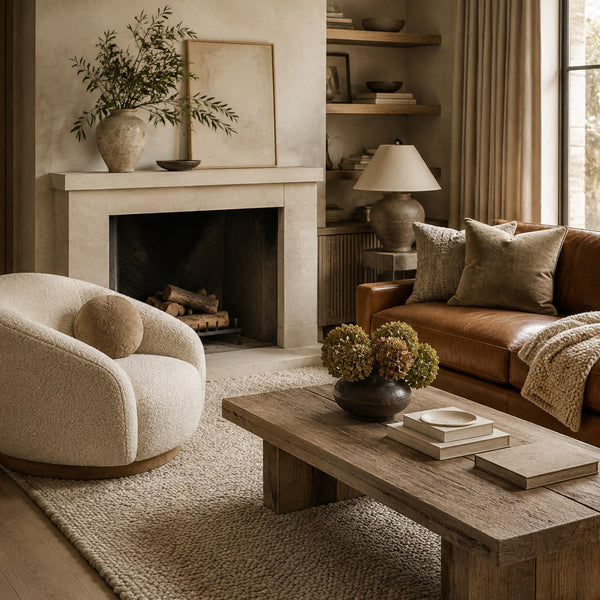
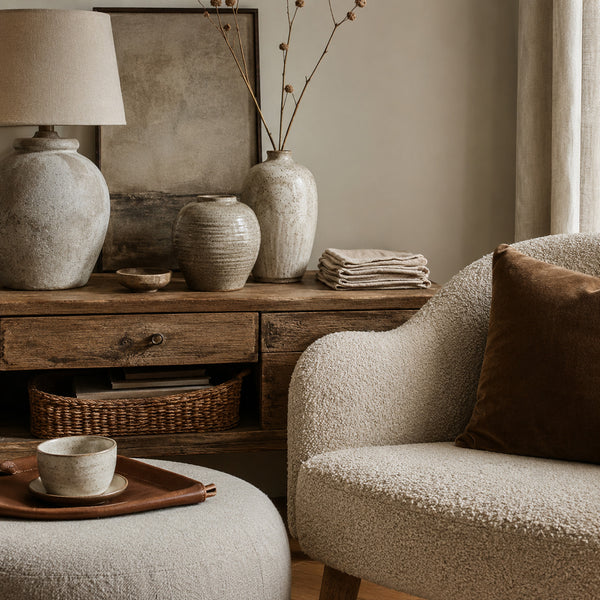
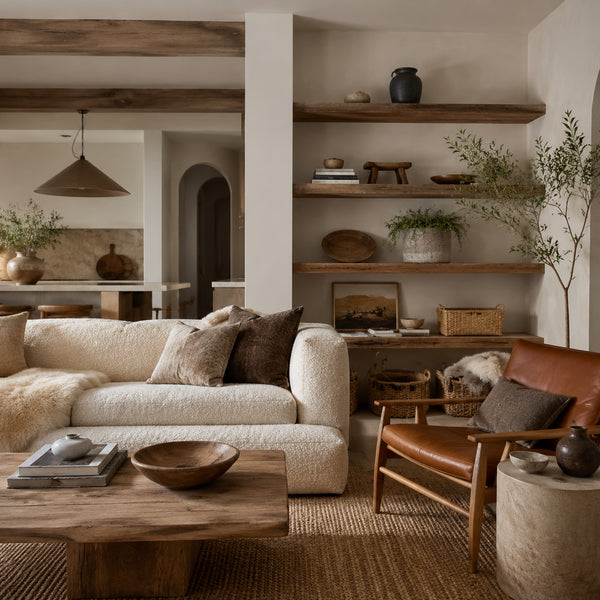
A smooth leather chair placed beside a nubby bouclé sofa creates contrast without introducing a new color. A rough wooden table adds visual weight against soft upholstery, while stone and ceramics bring subtle variations that prevent the room from looking manufactured or overly coordinated.
Texture also changes how comfortable a room feels. Soft fabrics invite relaxation, aged wood provides familiarity, and natural stone gives the interior a solid architectural foundation.
Begin With a Warm Neutral Foundation
Start with a simple background that allows individual materials to stand out. Warm white, oatmeal, beige, greige, soft taupe, and muted earthy tones work especially well.
Walls do not need to be completely smooth. Limewash, clay paint, plaster-style finishes, or subtly textured wallpaper can create a gentle background variation. These finishes react beautifully to natural and artificial light, producing soft shadows throughout the day.
For flooring, natural wood, stone, or a large woven rug provides an effective base. The goal is to establish warmth before adding furniture and decorative layers.
Use Bouclé to Introduce Softness
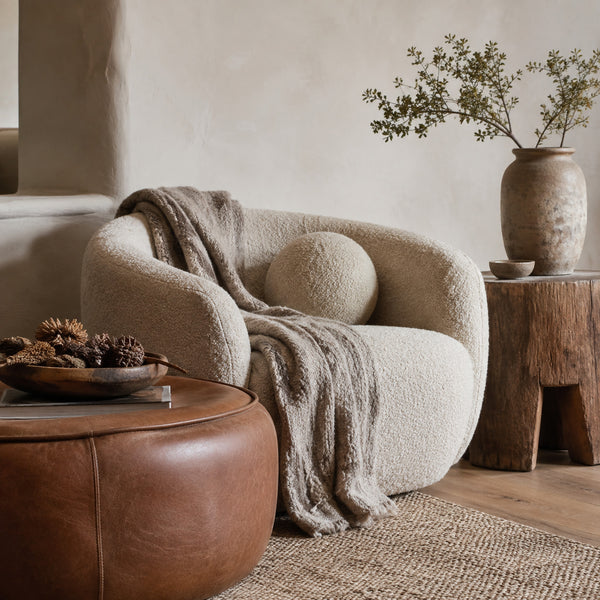
Bouclé has a looped, irregular surface that makes even a simple piece of furniture feel soft and dimensional. A bouclé armchair, bench, or occasional chair can instantly break up the smooth lines of a modern interior.
Because the fabric already has a strong visual texture, it works best in restrained colors such as cream, ivory, oatmeal, or warm grey. Pair it with smoother surfaces to prevent the room from becoming overly soft or visually heavy.
- Place a cream bouclé chair beside a smooth leather sofa.
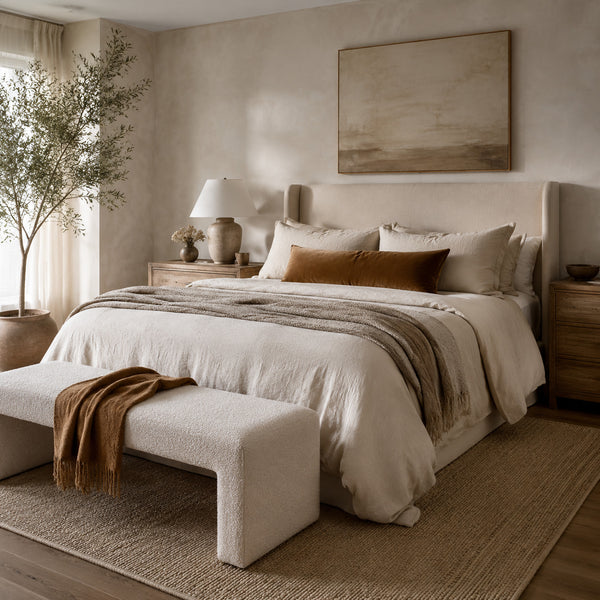
- Use a bouclé bench at the foot of a linen-covered bed.
- Combine bouclé upholstery with a solid wood or stone side table.
- Add one bouclé cushion to a smooth woven sofa for a subtle layer.
Balance Soft Fabrics With Leather
Leather provides smoothness, structure, and a slightly reflective surface. Cognac, caramel, tobacco, and muted brown leather introduce warmth without disrupting a neutral palette.
A leather accent chair can provide contrast in a room dominated by pale fabrics. Smaller leather elements, such as an ottoman, tray, cushion, or upholstered stool, offer the same effect on a more limited scale.
Natural variations, creases, and signs of age make leather particularly effective in relaxed modern rooms. It adds character and prevents new furniture from making the space appear too perfect or impersonal.
Add the Quiet Luxury of Velvet
Velvet brings depth because its appearance changes as light moves across the pile. Even when used in beige, brown, taupe, or olive, it creates a richer visual layer than a flat woven fabric.
Use velvet selectively so that it remains special. A lumbar cushion, accent chair, ottoman, or pair of small pillows may be enough. Combining velvet with linen or bouclé creates contrast between smooth, plush, and irregular surfaces.
Ground the Room With Stone
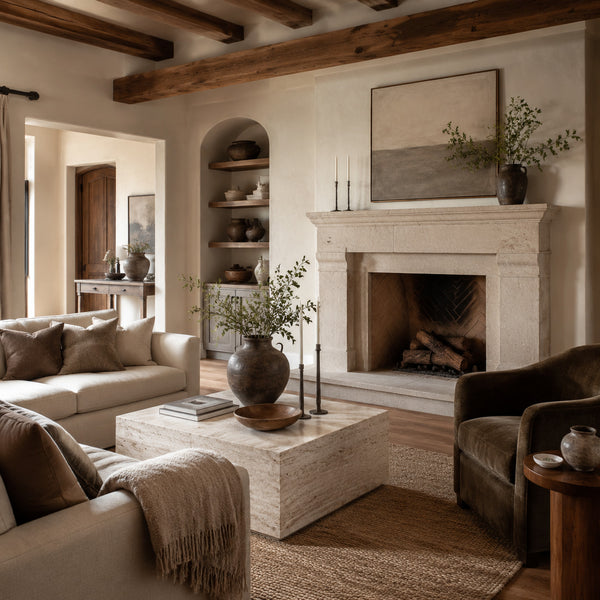
Stone gives a neutral interior visual permanence. Limestone fireplaces, travertine tables, marble accessories, and rough stoneware pieces introduce natural markings and tonal variation.
A substantial stone element can act as the room's anchor. Smaller spaces can achieve the effect through a stone side table, sculptural bowl, lamp base, or ceramic vessel with a mineral finish.
Avoid making every stone surface highly polished. Honed, tumbled, or softly textured finishes generally feel warmer and pair more naturally with distressed wood and relaxed textiles.
Bring in Distressed and Reclaimed Wood
Wood adds warmth through both its color and grain. Distressed, reclaimed, or lightly weathered finishes are especially helpful in neutral rooms because their marks and irregularities introduce history and movement.
A rustic coffee table can soften the clean lines of a contemporary sofa. Reclaimed shelves provide contrast against smooth plaster walls, while an aged sideboard gives ceramics and textiles a warmer foundation.
Not every wooden object needs to match. Combining medium oak, dark walnut, and aged brown accents can make the room appear naturally collected, provided the undertones remain compatible.
Layer Linen, Wool, and Woven Textiles
Linen has a relaxed surface that prevents neutral upholstery and bedding from looking too formal. Its natural creases are part of its appeal and work particularly well in bedrooms, living rooms, and dining areas.
Wool introduces warmth and density. Use it through rugs, blankets, upholstery, or cushions. A chunky wool throw creates a noticeably different texture from smooth linen curtains or a velvet pillow.
Woven materials such as jute, rattan, seagrass, and cane can provide further variation through rugs, baskets, lampshades, and furniture details.
Combine Large, Medium, and Small Textures
A successful room distributes texture across different scales. Large textured surfaces establish the main atmosphere, while smaller details complete the composition.
- Large layers: Flooring, rugs, sofas, curtains, fireplaces, and wall treatments.
- Medium layers: Armchairs, coffee tables, benches, throws, and substantial cushions.
- Small layers: Ceramics, trays, books, bowls, lamp bases, and decorative objects.
If every texture appears only in small accessories, the room may still feel flat. At least one or two larger elements should carry a clearly visible tactile quality.
Create Contrast Between Adjacent Surfaces
Texture layering is most noticeable when contrasting materials are placed beside each other. A velvet cushion becomes more distinctive against linen upholstery. A ceramic vase stands out on a rough wooden console, and a bouclé chair gains definition beside a smooth stone table.
Avoid grouping every soft texture in one corner and every hard material in another. Distributing them throughout the room creates balance and encourages the eye to move naturally across the space.
Use Lighting to Reveal Texture
Texture becomes visible through light and shadow. A room with only flat overhead illumination may lose much of its material depth.
Natural side lighting emphasizes stone, wood grain, woven fabrics, and plaster walls. In the evening, table lamps, wall sconces, and floor lamps produce soft directional light that brings those surfaces to life.
Warm bulbs reinforce the earthy tones found in leather, wood, linen, and stone. Avoid relying entirely on extremely cool or harsh lighting, which can make a neutral room feel clinical.
Avoid Overloading the Room
Layering does not mean filling every surface. Too many fabrics, baskets, objects, and finishes can replace calmness with visual clutter.
Choose a limited family of materials and repeat them in different parts of the room. For example, distressed wood may appear in a coffee table and shelves, while warm stone is repeated through the fireplace and a small side table.
Leave some smooth and empty areas so the more expressive textures have space to stand out.
A Simple Texture Formula
For an easy starting point, combine one material from each of the following groups:
- Soft: Bouclé, velvet, wool, or brushed cotton.
- Relaxed: Linen, washed canvas, or loosely woven fabric.
- Smooth: Leather, glass, or subtly polished metal.
- Organic: Distressed wood, rattan, jute, or seagrass.
- Mineral: Limestone, travertine, marble, plaster, or ceramics.
This combination creates enough variety to make a neutral space feel layered without requiring strong color contrasts.
Final Thoughts
A warm neutral room is built through contrast rather than color alone. Bouclé provides softness, leather adds structure, velvet introduces richness, stone establishes weight, and distressed wood brings natural character.
When these materials are repeated carefully and illuminated well, a monochrome interior becomes inviting and expressive. The result is a room that feels calm and modern, but never cold, empty, or unfinished.