
How to Style Open Shelves Like a Pro: A Step-by-Step Guide
How to Style Open Shelves Like a Pro: A Step-by-Step Guide
Open shelves can make a room feel lighter, more personal, and visually interesting, but they require a thoughtful arrangement to avoid looking cluttered. The most successful displays combine practical objects, artwork, books, ceramics, and natural elements while leaving enough empty space for every piece to stand out.
Whether you are decorating kitchen shelves, a living room bookcase, a bedroom display, or a compact apartment, the same basic principles apply. Balance, variation, repetition, and restraint can transform ordinary shelving into a polished part of the interior.
1. Start with a Clean and Empty Shelf
Remove everything before beginning the arrangement. Starting with empty shelves makes it easier to consider the complete composition instead of simply moving existing objects from one place to another.
Clean the shelves and gather the objects you may want to use. These can include books, bowls, vases, framed pictures, small sculptures, plants, baskets, candles, and attractive everyday items. You do not need to use everything. Selecting fewer meaningful pieces usually creates a stronger result.
2. Choose a Consistent Color Palette
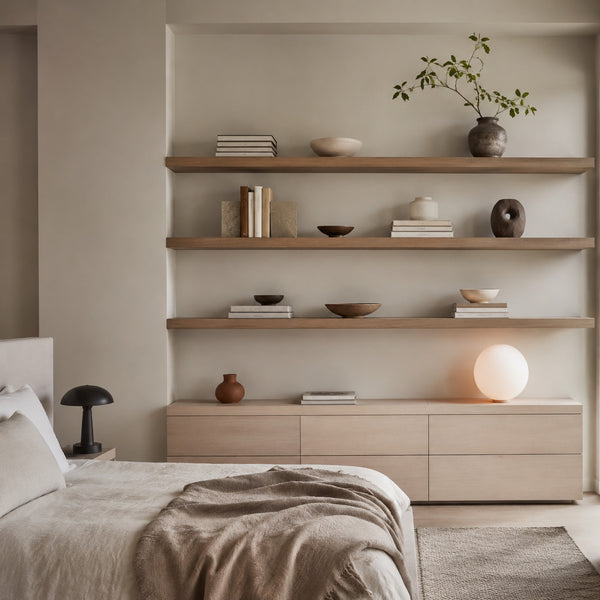
A limited palette helps different objects feel connected even when they vary in age, shape, or material. Neutral ceramics, natural wood, black accents, muted artwork, and greenery create a calm and adaptable foundation.
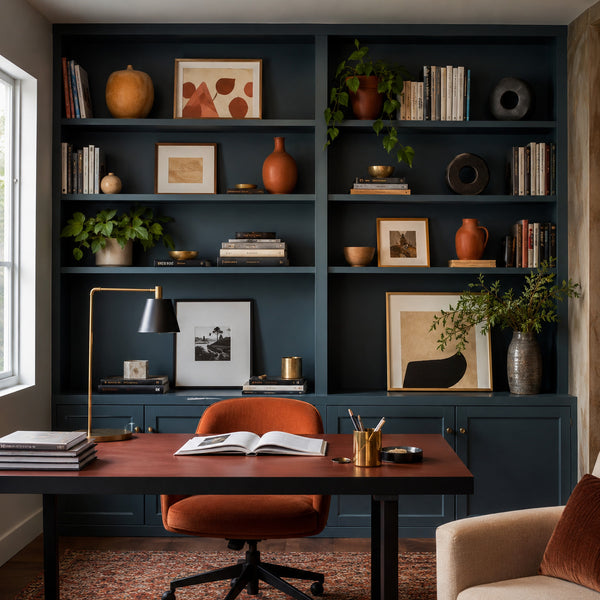
For a more colorful room, repeat two or three accent colors across several shelves. Terracotta, ochre, deep blue, green, or burgundy can add personality without making the display feel chaotic. The colors do not need to match exactly, but they should relate to the surrounding furniture and textiles.
3. Place the Largest Objects First
Begin with the visually strongest pieces, such as a large vase, framed artwork, basket, lamp, or sculpture. Distribute these objects across different shelves instead of placing them all at the same height or on one side.
Large pieces create visual anchors and establish the basic structure of the arrangement. Once these anchors are in place, smaller objects can be added around them without losing the overall balance.
4. Group Objects in Odd Numbers
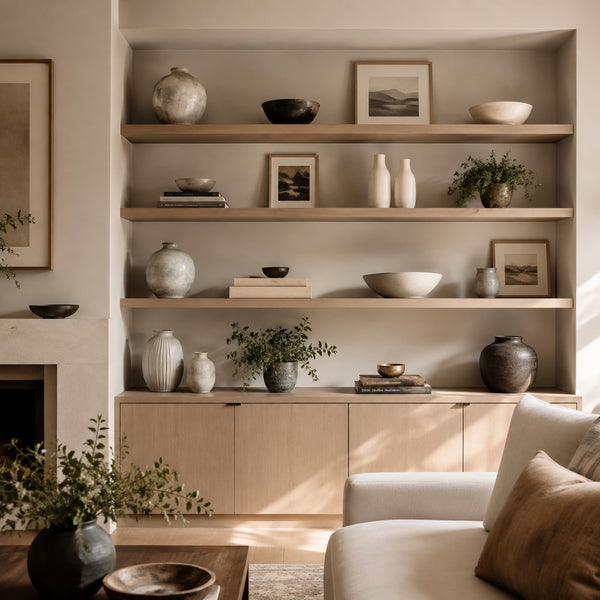
Groups of three are especially effective when styling open shelves. Combine objects with different heights and shapes, such as a tall vase, a small bowl, and a stack of books. This creates a natural visual rhythm and prevents the arrangement from feeling too rigid.
Objects do not need to be identical. In fact, a mixture of materials often looks more interesting. Try combining ceramic, wood, metal, glass, stone, or woven textures while maintaining a consistent color story.
5. Use Books Horizontally and Vertically
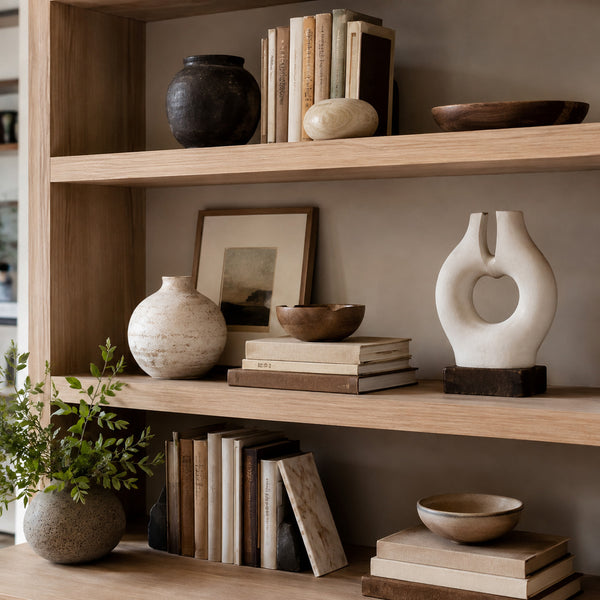
Books are useful decorative tools because they introduce color, texture, and different levels. Arrange some books vertically and place others in horizontal stacks. A horizontal stack can serve as a base for a small bowl, candle, sculpture, or framed picture.
Avoid filling every shelf completely with books unless the shelving is intended primarily as a library. Mixing books with decorative pieces creates breathing room and makes individual objects easier to appreciate.
6. Layer Artwork Behind Smaller Objects
Small framed prints, photographs, or paintings can be leaned against the back of the shelf rather than hung on the wall. Place a bowl, vase, or small sculpture slightly in front of the frame to create depth.
This layered approach makes the display feel collected over time rather than arranged in a single session. Keep part of the artwork visible and avoid covering its most important details.
7. Combine Decorative and Functional Pieces
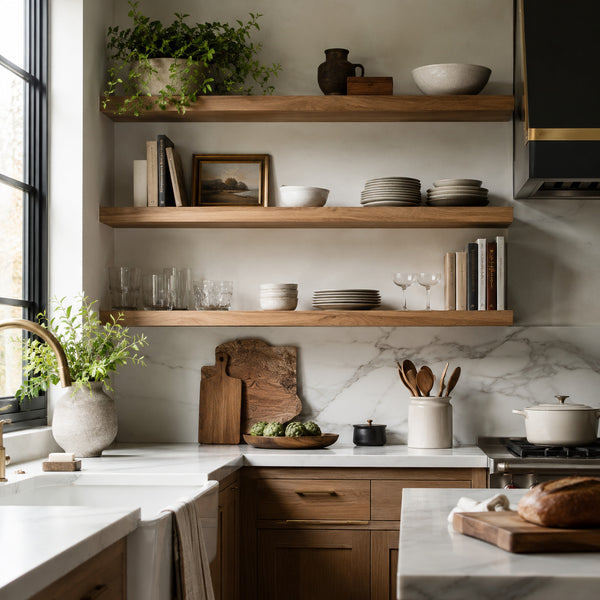
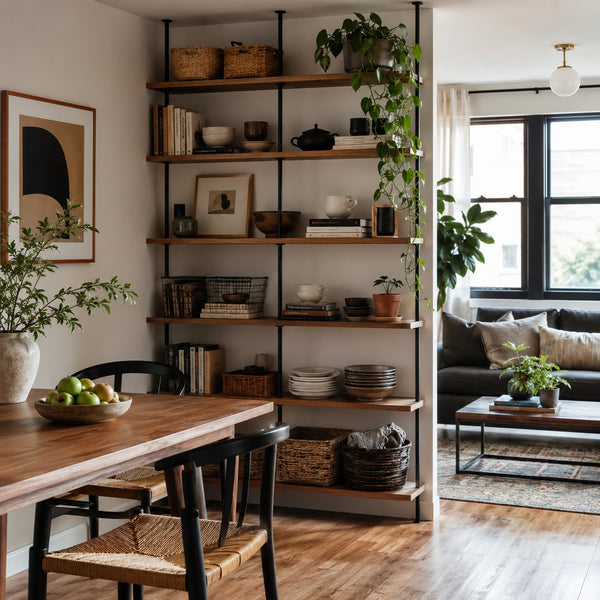
Open kitchen shelves can display plates, glasses, serving bowls, cutting boards, and cookware alongside plants, artwork, and cookbooks. Frequently used objects should remain easy to reach, while decorative pieces can occupy the higher or less accessible shelves.
In living rooms and home offices, baskets and boxes can conceal smaller items while contributing texture. This allows the shelving to remain practical without exposing every everyday object.
8. Create Visual Balance Without Perfect Symmetry
A professional arrangement often feels balanced without being completely symmetrical. If one shelf contains a large dark vase, another part of the display might repeat that visual weight with several books, a framed picture, or a group of smaller dark objects.
Step back regularly and look at the shelves as a complete composition. Check whether one side appears heavier, darker, or more crowded than the other. Small adjustments can make a significant difference.
9. Leave Intentional Empty Space
Empty space is an essential part of shelf styling. It separates groups, highlights special pieces, and keeps the display from looking like storage overflow. Every shelf does not need to be completely filled.
Allow some objects to stand alone, especially sculptural ceramics, artwork, or pieces with an interesting silhouette. The space around an object helps it become a focal point.
10. Add Natural Elements
Plants, branches, dried flowers, and natural materials introduce softness and movement. A trailing plant works particularly well on a higher shelf, while a simple branch in a ceramic vase can add height without creating visual clutter.
Use greenery selectively. One or two carefully positioned plants may have more impact than placing a plant on every shelf.
11. Mix Vintage and Modern Objects
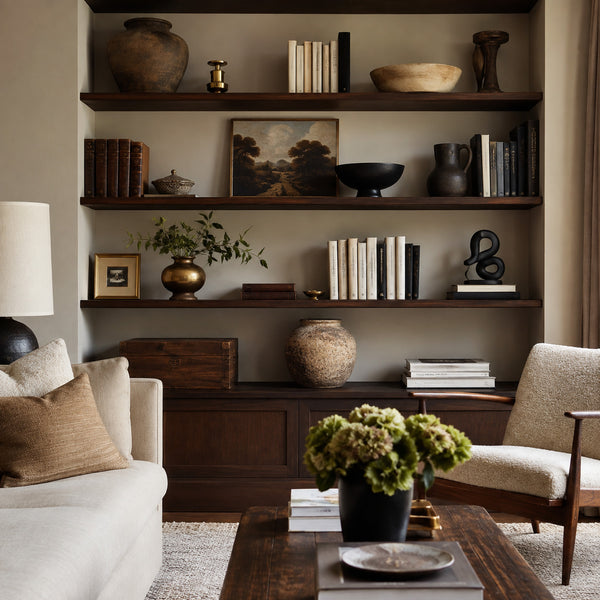
Combining objects from different periods gives open shelving character. An aged brass accessory, antique pottery, or vintage picture frame can sit comfortably beside contemporary books, abstract art, and modern ceramics.
The key is to create connections through color, material, or shape. Repeating a finish or tone across the shelves helps varied pieces feel intentional rather than unrelated.
12. Edit the Final Arrangement
Once the shelves are styled, remove one or two objects from any area that feels crowded. Editing is often what separates a polished display from an overloaded one.
Take a photograph of the complete shelving unit. A photograph can make uneven spacing, excessive repetition, or visually heavy areas easier to identify. Make final adjustments until the arrangement feels balanced from both close up and across the room.
Final Open-Shelf Styling Checklist
- Begin with completely empty and clean shelves.
- Select a consistent but flexible color palette.
- Position the largest decorative objects first.
- Arrange smaller items in groups of three.
- Alternate horizontal and vertical book placement.
- Layer framed artwork behind smaller objects.
- Mix functional storage with decorative pieces.
- Balance visual weight across the complete display.
- Leave intentional empty space between groups.
- Add a limited number of natural elements.
- Combine vintage and modern pieces thoughtfully.
- Remove unnecessary objects before finishing.
Create Shelves That Feel Personal
The best open shelves are not simply decorative. They tell a story about the home through books, collected objects, useful pieces, artwork, and natural textures. Instead of following a rigid formula, use these principles to create an arrangement that feels balanced, practical, and personal.
Open shelving can also evolve over time. Change a few objects with the seasons, introduce a new piece of art, or rearrange books and ceramics whenever the room needs a subtle refresh.