
Smart Home Lighting Secrets: How to Automate Ambience in Every Room
Smart Home Lighting Secrets: How to Automate Ambience in Every Room
Smart lighting can transform the atmosphere of a home without changing its furniture, colors, or architectural character. The most successful systems do more than turn lights on remotely: they coordinate brightness, color temperature, and different light sources to support the way each room is used throughout the day.
A carefully planned setup can create energizing mornings, comfortable working conditions, relaxed evenings, and gentle nighttime illumination. Smart bulbs, dimmers, switches, sensors, and scheduled scenes can all work quietly in the background while remaining visually compatible with traditional interior decor.
Begin with Layers of Light
Instead of relying on one bright ceiling fixture, combine several complementary lighting layers. Ambient lighting provides general illumination, task lighting supports specific activities, and accent lighting highlights artwork, shelving, architectural details, or decorative objects.
- Ambient lighting: Ceiling fixtures, recessed lights, and indirect illumination establish the room’s overall brightness.
- Task lighting: Desk lamps, reading lamps, pendants, and under-cabinet lights illuminate working surfaces.
- Accent lighting: Wall sconces, picture lights, shelf lighting, and concealed LED strips add depth and visual interest.
Connecting these layers to one automated scene allows the atmosphere to change with a single command or according to a schedule.
Create a Relaxing Living Room Scene
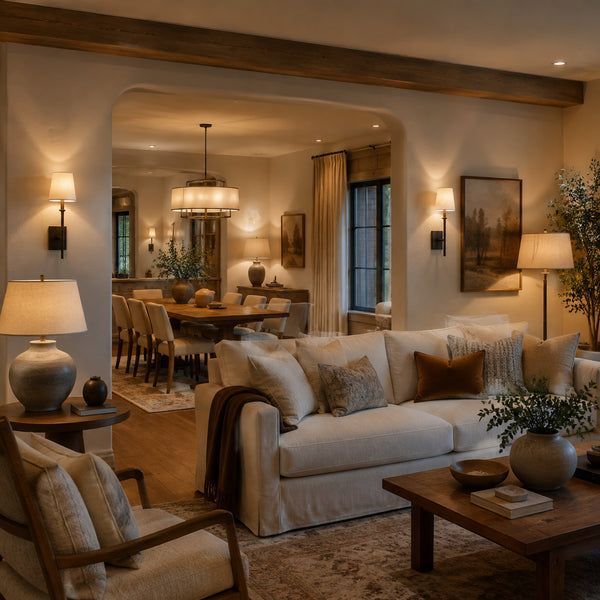
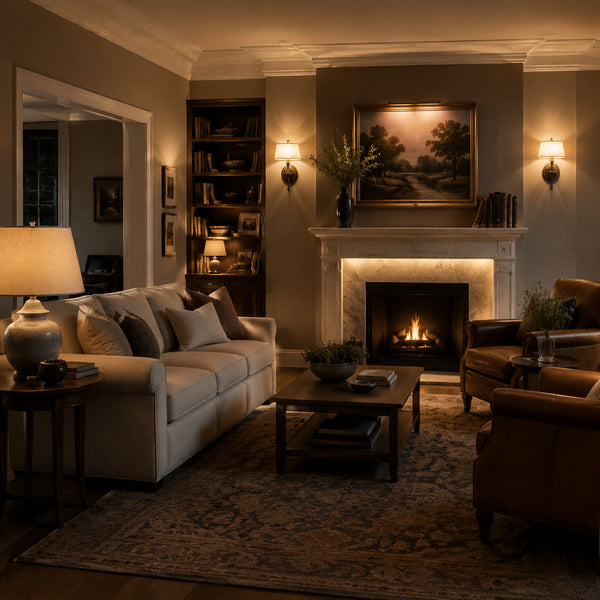
The living room benefits from several scenes rather than one fixed lighting level. A daytime setting can use brighter ceiling lights, while an evening scene can reduce overhead illumination and emphasize table lamps, floor lamps, and wall sconces.
For a relaxed evening, use warm light around 2700K and lower the brightness gradually. A movie scene might switch off the main ceiling fixture while retaining subtle lamps behind or beside the seating area. A reading scene can increase the nearest floor lamp without illuminating the entire room.
Schedule Kitchen Lighting Around Daily Routines
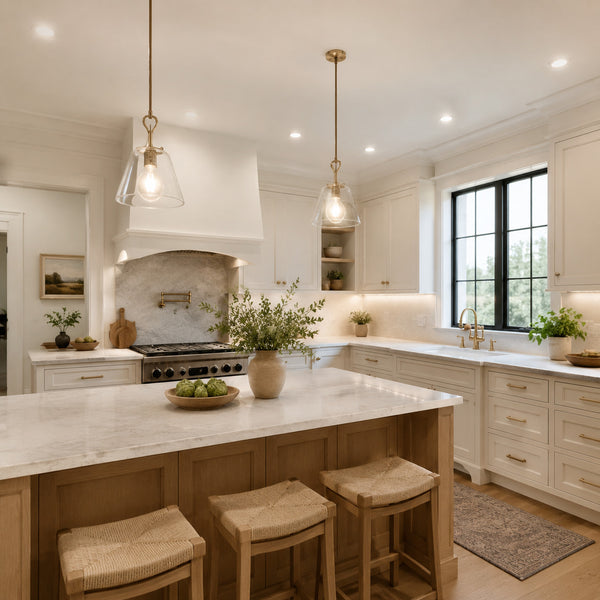
Kitchens require brighter, more functional illumination during food preparation. A morning scene can combine pendants, ceiling fixtures, and under-cabinet lighting at a neutral color temperature between approximately 3500K and 4000K.
Later in the evening, the same kitchen can feel calmer by dimming the ceiling lights and leaving the pendants or cabinet lighting at a warmer setting. This creates a smoother transition from an active workspace to a comfortable part of the living area.
Use Warmer Light Before Bed
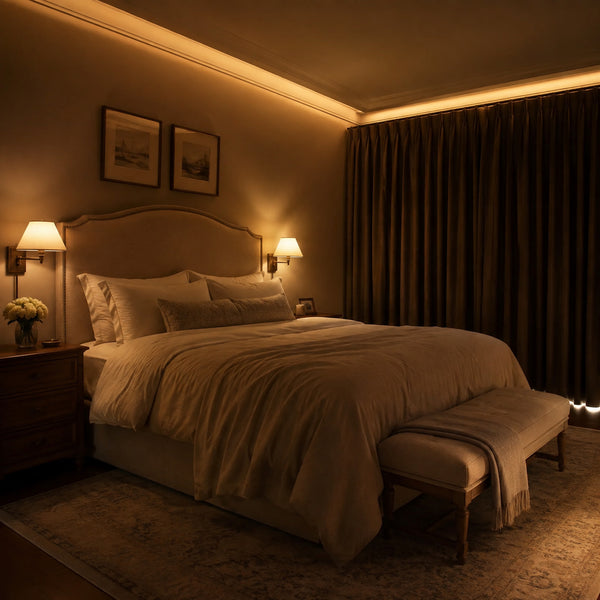
Bedroom lighting should become progressively softer and warmer as bedtime approaches. Automated schedules can reduce brightness during the evening and shift compatible lights toward warmer tones.
Bedside sconces, table lamps, and concealed cove lighting are usually more relaxing than strong overhead illumination. A bedtime scene can switch off the main fixture, lower the bedside lights, and close compatible smart blinds or curtains. A morning routine can reverse the process gradually rather than illuminating the room at full brightness immediately.
Add Gentle Night Lighting to Bathrooms
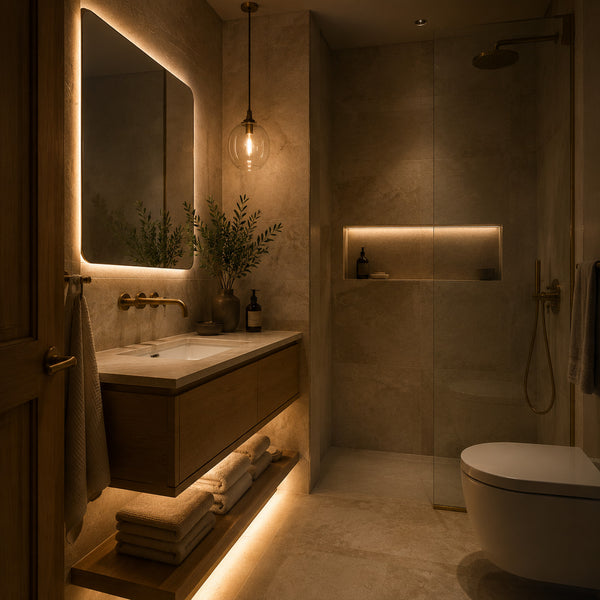
Bright bathroom lighting can feel uncomfortable during the night. Low-level illumination beneath a vanity, beside the floor, or around a mirror can make the room easier to navigate without activating every fixture.
A motion sensor can trigger this subtle nighttime scene automatically and switch it off again after a short period. The main mirror and ceiling lights can remain available for morning routines, grooming, and cleaning.
Make Hallways Safer Without Visual Clutter
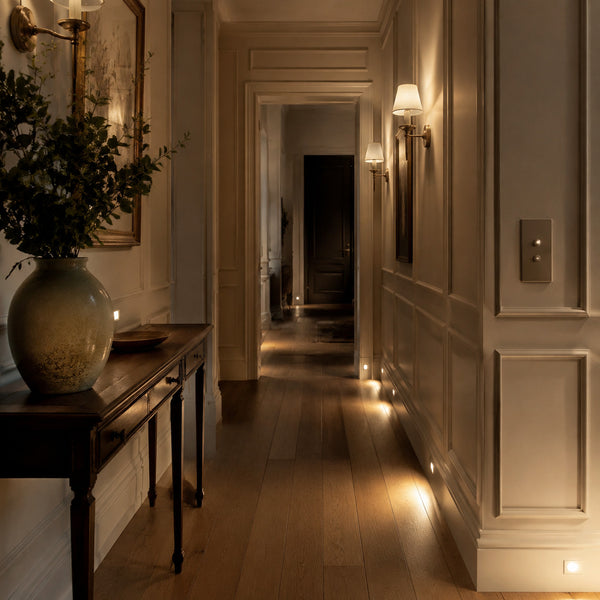
Hallways and transitional spaces are ideal for discreet automation. Small floor-level lights can respond to movement, while wall sconces can follow evening schedules. This provides practical guidance through the home without leaving every ceiling light switched on.
Choose smart switches and dimmers with simple finishes that coordinate with existing hardware. Neutral plates, traditional toggle designs, and understated controls allow modern automation to blend into paneled walls and classic interiors.
Build a Focused Home Office Scene
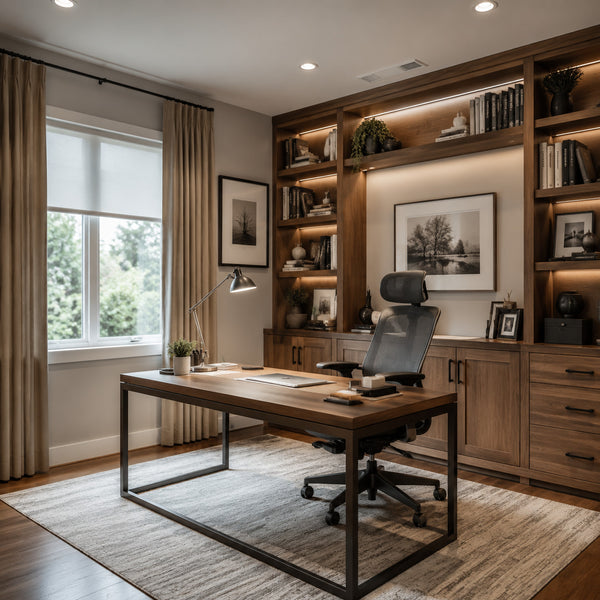
A productive home office needs balanced illumination with minimal glare. Combine daylight, an adjustable desk lamp, soft ceiling lighting, and indirect shelf illumination. A neutral color temperature between approximately 3500K and 4000K can create a clear working environment without making the room feel clinical.
An automated focus scene can activate these sources together during working hours. At the end of the day, a warmer and dimmer setting helps transform the office back into a calmer residential space.
Keep Smart Controls Subtle
Smart lighting does not need to make a home resemble a technology showroom. Conventional-looking switches, hidden sensors, concealed LED strips, and carefully selected fixtures preserve the room’s decorative character.
- Use smart switches when several bulbs are controlled by the same wall circuit.
- Use smart bulbs when individual color temperature or brightness control is important.
- Place sensors where movement can be detected without making the device visually prominent.
- Keep physical controls available so guests can operate the lights easily.
- Give scenes clear, simple names based on activities such as Morning, Focus, Dinner, Relax, and Night.
Start with a Few Useful Automations
There is no need to automate every fixture immediately. Begin with the rooms used most frequently and create a small number of dependable scenes. A morning kitchen routine, an evening living room setting, a bedroom wind-down schedule, and gentle hallway night lighting can already make a noticeable difference.
The best smart lighting system is one that feels natural. When automation supports daily routines, complements the decor, and remains easy to control manually, the technology becomes almost invisible while the atmosphere becomes noticeably more comfortable.