
The Art of Slow Decor – Creating Calm and Intentional Spaces
The Art of Slow Decor – Creating Calm and Intentional Spaces
Slow decor is a thoughtful approach to interior design that values comfort, meaning, and longevity over constantly changing trends. Instead of filling a home quickly, it encourages creating each room gradually with natural materials, useful furniture, personal objects, and colors that promote a calm atmosphere.
The result is not an empty or overly minimalist home. A slow-decor interior can feel warm, layered, and full of character while remaining comfortable and visually balanced. Every object has space to be appreciated, and every material contributes to the overall feeling of the room.
Choose a Calm and Natural Color Palette
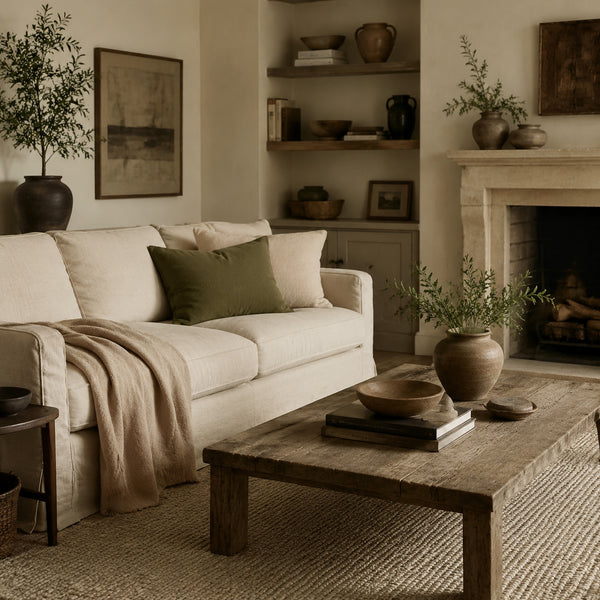
Warm whites, sand, beige, clay, soft brown, muted green, and other earthy colors create a peaceful foundation. These shades reflect the colors found in nature and make it easier to combine different materials without making the room feel crowded.
Neutral walls can be complemented with deeper accents through cushions, ceramics, artwork, rugs, or plants. The objective is not to remove color completely, but to use it intentionally and maintain a comfortable visual rhythm.
Bring Natural Materials into the Home
Wood, linen, cotton, wool, stone, rattan, and handmade ceramics are central to slow decor. Their natural variations and imperfect finishes give interiors warmth and individuality.
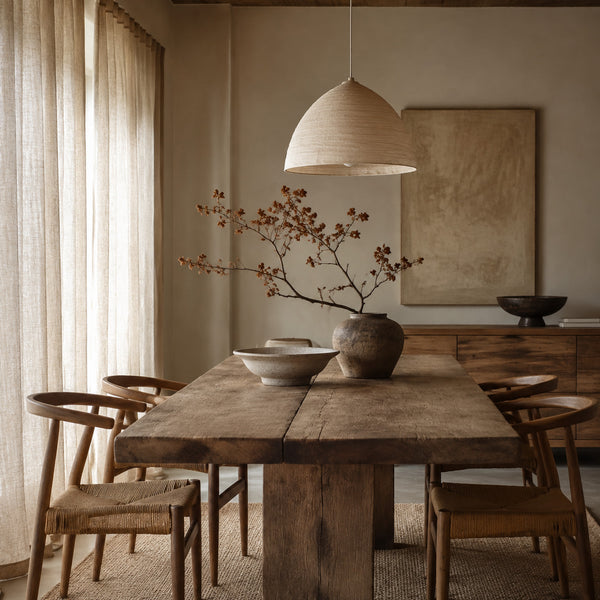
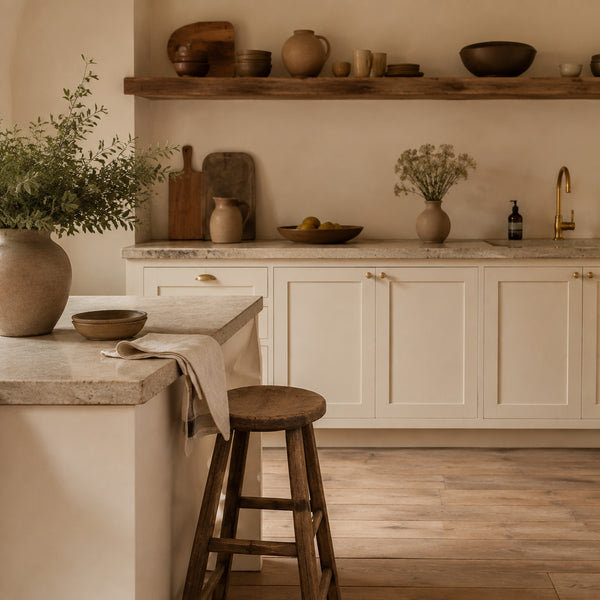
- Natural Wood: Tables, shelves, stools, and cabinets introduce warmth and visible texture.
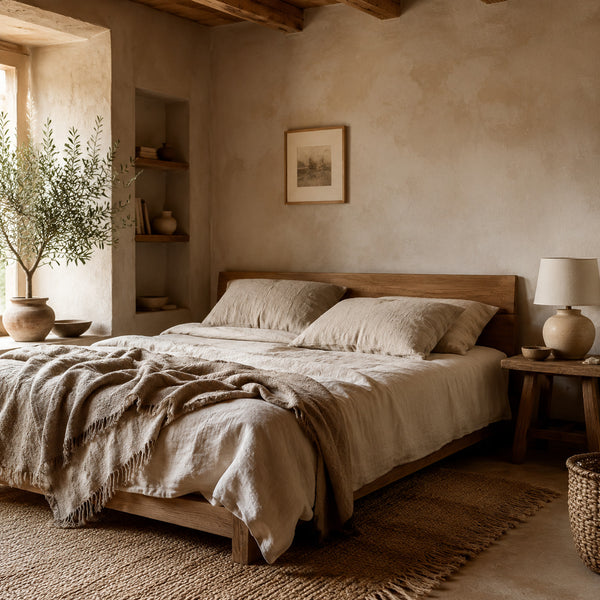
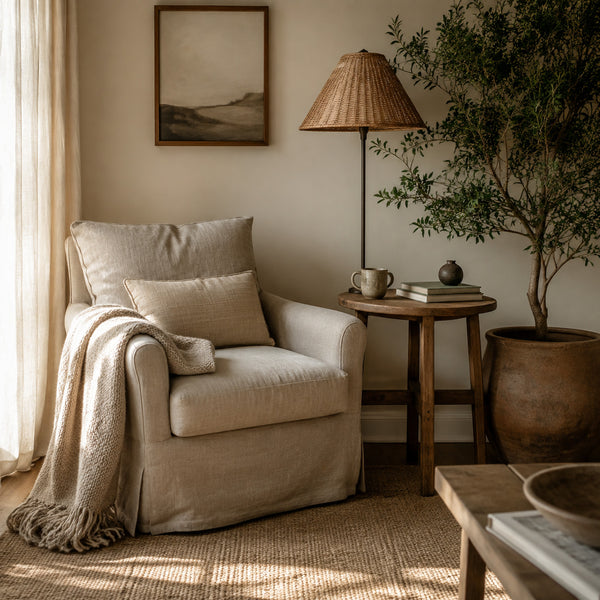
- Linen and Cotton: Curtains, cushions, bedding, and throws create a relaxed and comfortable appearance.
- Stone Surfaces: Stone fireplaces, tables, bowls, and decorative objects add visual weight and durability.
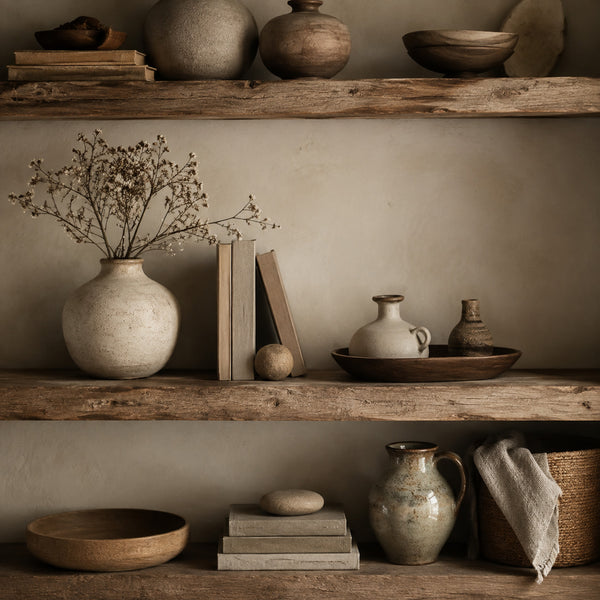
- Handmade Ceramics: Vases, dishes, and planters bring subtle irregularities that make a room feel more personal.
- Woven Fibers: Rugs, baskets, and lampshades soften the space while providing useful texture.
Decorate Gradually and with Purpose
A slow-decor home does not need to be completed in a weekend. Allowing rooms to develop gradually makes it easier to understand what is genuinely useful and what simply occupies space.
Before adding something new, consider whether it improves the comfort, function, or character of the room. A well-positioned chair, an inherited table, or a handmade vase can contribute more than several decorative objects selected only to fill an empty surface.
Create Space Around Meaningful Objects
Decluttering is an important part of slow decor, but it does not require removing everything. The goal is to reduce visual competition so that useful and meaningful objects can be properly appreciated.
Open shelves can display a small collection of ceramics, books, or natural objects. Tables and cabinets should retain enough clear surface to make the room feel calm and easy to use.
Use Soft and Layered Lighting
Lighting influences how colors, materials, and textures are perceived. A combination of natural daylight, table lamps, floor lamps, wall lights, and carefully positioned ambient lighting creates a softer environment than relying on a single bright ceiling fixture.
Warm light works particularly well with wood, linen, stone, and earthy colors. It highlights their textures and helps living rooms, bedrooms, and reading corners feel more comfortable during the evening.
Invest in Furniture Designed to Last
Slow decor prioritizes furniture that remains useful over time. Simple shapes, durable construction, repairable materials, and adaptable designs are generally more valuable than pieces selected for a short-lived trend.
This does not mean every item must be expensive. Vintage furniture, restored pieces, handmade objects, and carefully selected second-hand finds can all become lasting parts of an intentional home.
Let the Interior Reflect Everyday Life
A calm interior should still feel lived in. Books, blankets, plants, artwork, family objects, and everyday items give a home identity. Slow decor simply provides a considered framework for displaying and using them without creating unnecessary disorder.
By choosing materials carefully, leaving room for the interior to evolve, and surrounding yourself with objects that have genuine purpose or meaning, you can create a home that feels peaceful, comfortable, and personal for many years.