
The Rug Sizing Rulebook: How to Choose the Right Size for Every Room
The Rug Sizing Rulebook: How to Choose the Right Size for Every Room
A well-chosen area rug can make an interior feel balanced, comfortable, and complete. It connects furniture, defines functional zones, introduces texture, and creates a visual foundation for the entire room. However, choosing the wrong size can make even beautiful furniture appear disconnected or out of proportion.
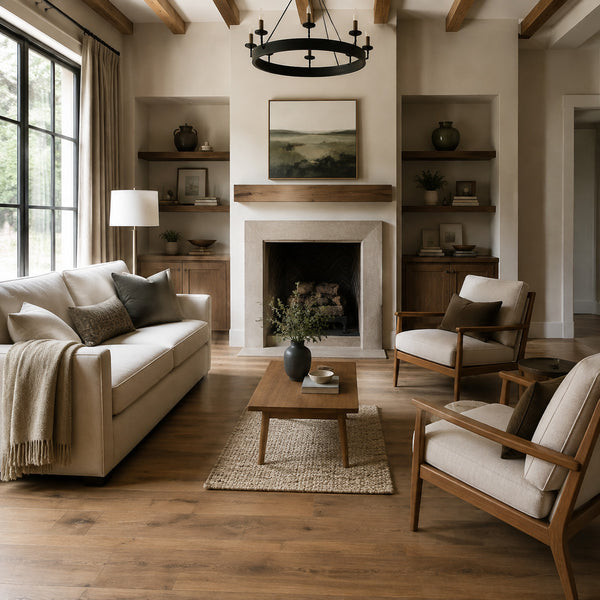
The most common mistake is selecting a rug that is too small. Instead of anchoring the furniture, it floats in the middle of the room and emphasizes the empty floor around it. The right rug should relate to the furniture arrangement rather than simply covering an available patch of floor.
Measure the Furniture Layout First
Before choosing a rug, measure the area occupied by the furniture rather than relying only on the total dimensions of the room. Mark the proposed rug outline on the floor with removable painter’s tape. This makes it much easier to see whether the rug feels generous enough and whether doors, cabinets, or walkways will remain clear.
Whenever possible, leave a visible border of flooring around the rug. A consistent border helps the room feel intentional and prevents the rug from appearing squeezed against the walls.
Living Room Rug Sizing Rules
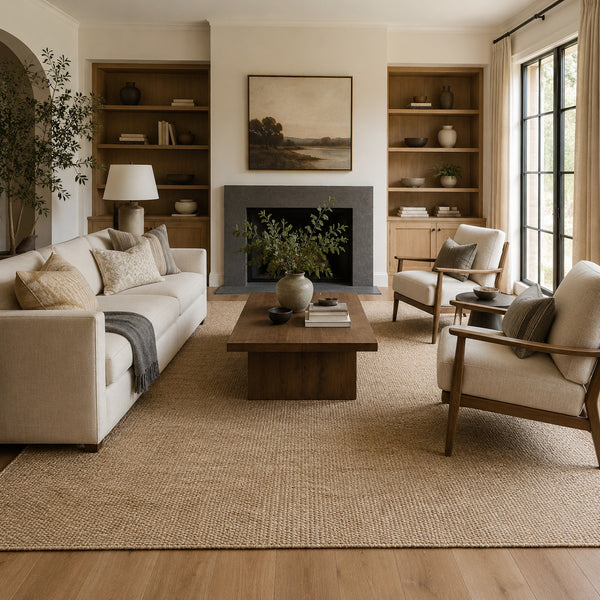
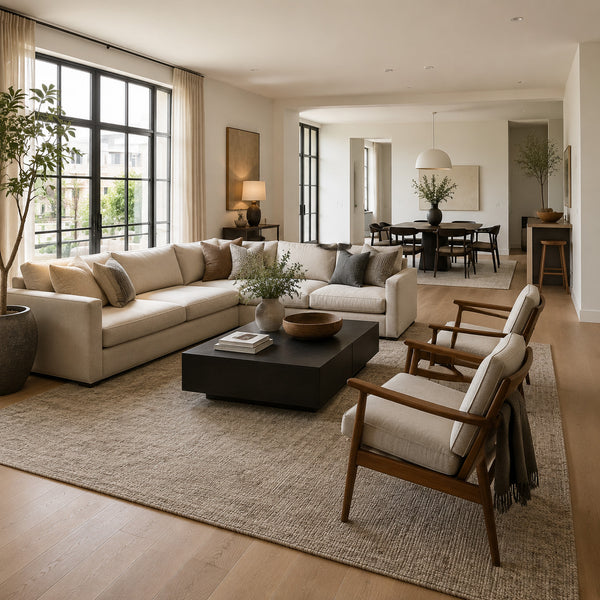
In a living room, the rug should visually connect the sofa, armchairs, and coffee table. There are three reliable furniture arrangements, depending on the size of the room.
All Furniture Legs on the Rug
This arrangement works especially well in large living rooms. The rug extends beneath the sofa, chairs, coffee table, and side tables, creating one clearly defined seating area. Leave enough space behind each piece of furniture so that it does not sit directly on the rug’s edge.
Front Furniture Legs on the Rug
For medium-sized rooms, place the front legs of the sofa and armchairs on the rug while leaving the rear legs on the floor. This connects the furniture without requiring an exceptionally large rug. The rug should extend beyond both ends of the sofa to maintain visual balance.
Compact Living Rooms
In a smaller living room, a rug can sit in front of the sofa with the coffee table placed on top. However, it should still be large enough to relate to the width of the sofa. A tiny rug positioned only beneath the coffee table usually makes the seating arrangement look fragmented.
Common starting sizes include 160 × 230 cm for compact rooms, 200 × 300 cm for medium seating arrangements, and 250 × 350 cm or larger for spacious living rooms. These measurements are useful references, but the furniture layout should always determine the final choice.
Bedroom Rug Sizing Rules
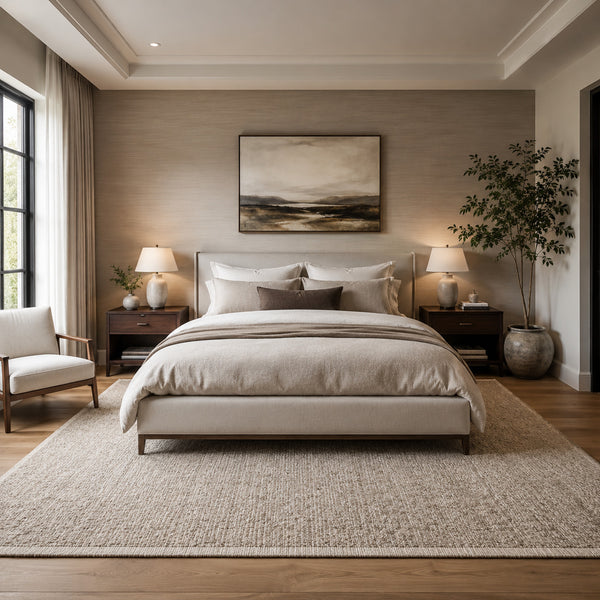
A bedroom rug should frame the bed and provide a soft surface where your feet naturally land. It does not always need to extend beneath the entire bed, but it should be visible at both sides and beyond the foot of the bed.
Large Rug Beneath the Bed
For a balanced appearance, position a large rug beneath the lower two-thirds of the bed. It should extend far enough on both sides to create comfortable walking space. A queen bed commonly works with a rug around 200 × 300 cm, while king beds often benefit from approximately 240 × 340 cm or larger.
Rug Beneath Bed and Nightstands
For a more luxurious effect, choose a rug large enough to sit beneath the bed and both nightstands. This produces a continuous visual foundation and works particularly well in spacious bedrooms.
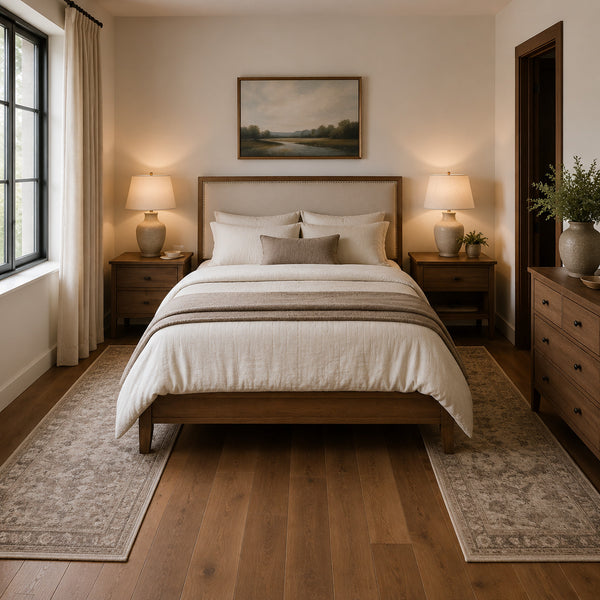
Runner Rugs
Matching runner rugs placed along both sides of the bed are a practical alternative when a large rug is unnecessary or difficult to position. Keep the runners aligned with the bed and long enough to cover the main walking area.
A bedroom rug that ends directly at the sides of the mattress will usually appear too small. The visible extension around the bed is what creates softness and proportion.
Dining Room Rug Sizing Rules
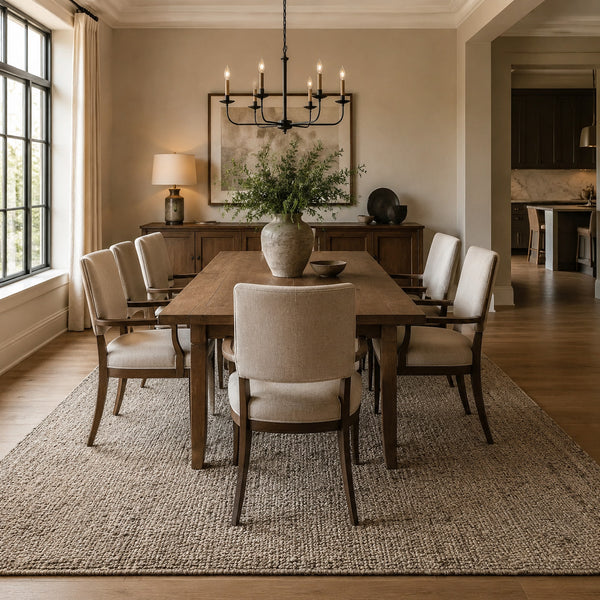
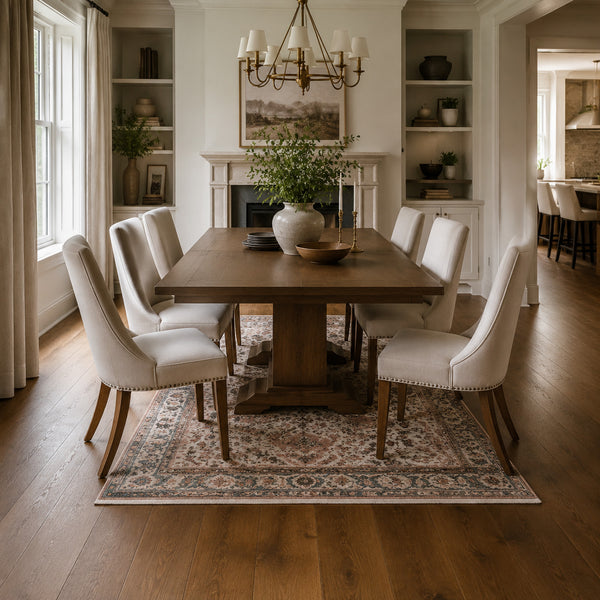
Dining room rugs must accommodate both the table and the chairs, including when the chairs are pulled away from the table. This is important for appearance, comfort, and everyday use.
Measure the tabletop and add approximately 60 to 75 cm on every side. This additional space allows the rear chair legs to remain on the rug when someone sits down or stands up.
If the rug is too small, the chair legs will repeatedly catch on its edge. The arrangement may also look unbalanced because the rug relates only to the table and not to the complete dining area.
A six-seat rectangular dining table will frequently require a rug close to 200 × 300 cm, although the exact size depends on the table and chairs. Always test the chairs in their fully pulled-out position before making the final decision.
Choosing the Right Rug Shape
The rug shape should normally reflect the furniture arrangement placed above it:
- Rectangular rugs suit most living rooms, bedrooms, and rectangular dining tables.
- Round rugs work well beneath round dining tables or in compact conversational areas.
- Square rugs can complement square rooms and symmetrical furniture arrangements.
- Runner rugs are ideal for hallways, narrow kitchens, and the sides of beds.
The shapes do not have to match perfectly, but a clear visual relationship between the rug and furniture usually creates the most cohesive result.
Using Rugs in Open-Plan Spaces
In an open-plan home, rugs can define individual zones without requiring walls. One rug can establish the living area while another identifies the dining space. Each rug should be large enough to contain the furniture associated with that zone.
The rugs do not need to match exactly. They can share a similar color, texture, or visual weight while maintaining distinct patterns. This creates continuity without making the open space feel overly coordinated.
Common Rug Layout Mistakes
- Choosing a rug that fits only beneath the coffee table.
- Failing to extend the rug beyond the ends of the sofa.
- Using a bedroom rug that disappears almost completely beneath the bed.
- Selecting a dining rug that cannot accommodate pulled-out chairs.
- Placing a rug directly against every wall without leaving a floor border.
- Ignoring door clearance or nearby cabinet doors.
- Choosing a rug before measuring the complete furniture arrangement.
Quick Rug Sizing Checklist
- Measure the furniture layout before shopping.
- Use painter’s tape to preview the rug dimensions.
- Choose the larger size when deciding between two similar options.
- Connect the main pieces of furniture visually.
- Leave a deliberate border of visible flooring.
- Check doors, cabinets, walkways, and chair movement.
- Select a shape that complements the room and furniture arrangement.
Create a Stronger Foundation for Every Room
The right area rug does more than decorate the floor. It establishes proportion, connects furniture, and gives each room a clear visual structure. By measuring the complete furniture arrangement and avoiding undersized rugs, you can create interiors that feel more spacious, comfortable, and intentionally designed.