
The Ultimate Room-by-Room Lighting Guide: Functional to Ambient
The Ultimate Room-by-Room Lighting Guide: Functional to Ambient
Good lighting does more than make a room visible. It influences comfort, concentration, atmosphere, and how colors and materials appear throughout the home. The most effective interiors combine several light sources instead of depending on a single ceiling fixture.
This room-by-room guide explains how to layer ambient, task, and accent lighting while selecting suitable color temperatures for each space.
Understanding the Three Layers of Lighting
- Ambient Lighting: Provides the room’s general illumination through ceiling fixtures, recessed lights, wall sconces, or large floor lamps.
- Task Lighting: Directs light toward activities such as preparing food, reading, working, applying makeup, or getting dressed.
- Accent Lighting: Highlights artwork, shelving, architectural details, plants, and decorative textures.
Combining these three layers creates greater depth and allows the atmosphere to change according to the activity or time of day.
Choosing the Right Color Temperature
Color temperature is measured in kelvins and determines whether a light appears warm, neutral, or cool.
- Warm light, approximately 2200K–3000K: Creates a comfortable and relaxing atmosphere for living rooms and bedrooms.
- Neutral light, approximately 3000K–4000K: Provides balanced illumination for kitchens, bathrooms, and multifunctional spaces.
- Cool light, approximately 4000K–5000K: Supports visibility and concentration in workspaces or detailed task areas.
Living Room Lighting
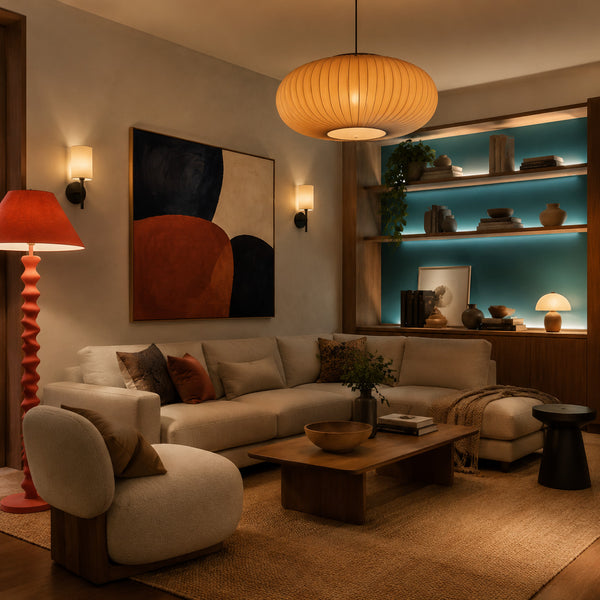
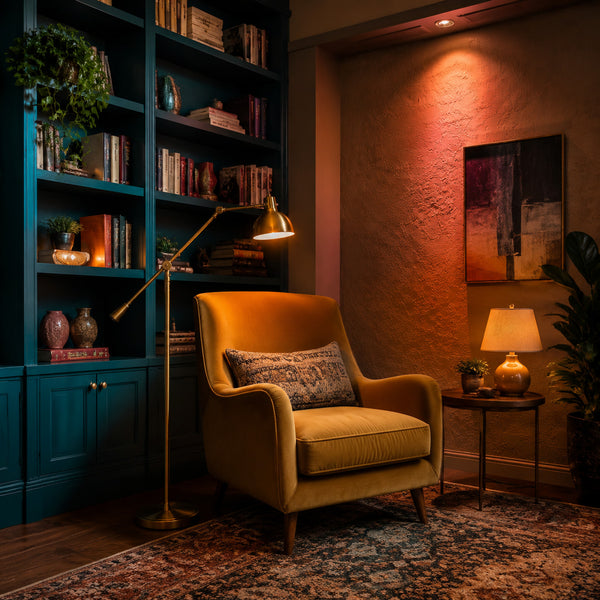
The living room benefits from flexible lighting because it may be used for conversation, reading, watching television, and entertaining. Begin with soft ambient illumination and introduce floor lamps or table lamps beside seating areas.
Wall sconces, picture lights, and concealed shelf lighting can emphasize artwork and architectural details. Dimmers make it easier to move from practical daytime lighting to a softer evening atmosphere.
Kitchen Lighting
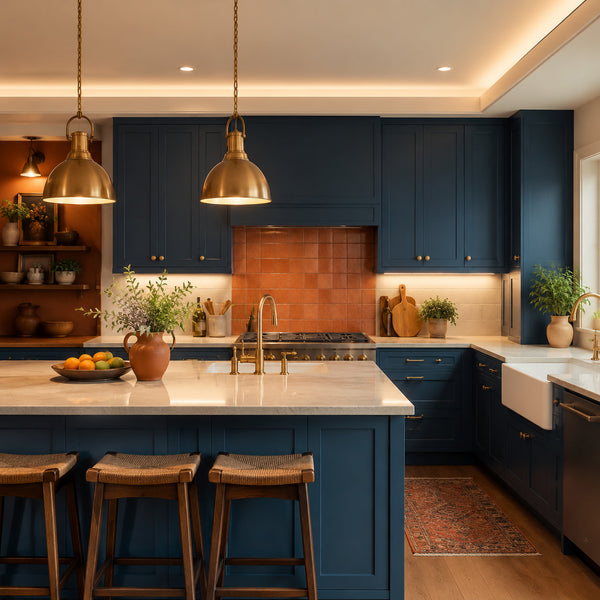
A kitchen requires clear task lighting without losing warmth. Pendant lights can illuminate an island or dining counter, while under-cabinet lights brighten preparation surfaces and reduce shadows.
General ceiling illumination should distribute light evenly across circulation areas. A neutral color temperature helps food, finishes, and worktops appear natural while maintaining a comfortable environment.
Bedroom Lighting
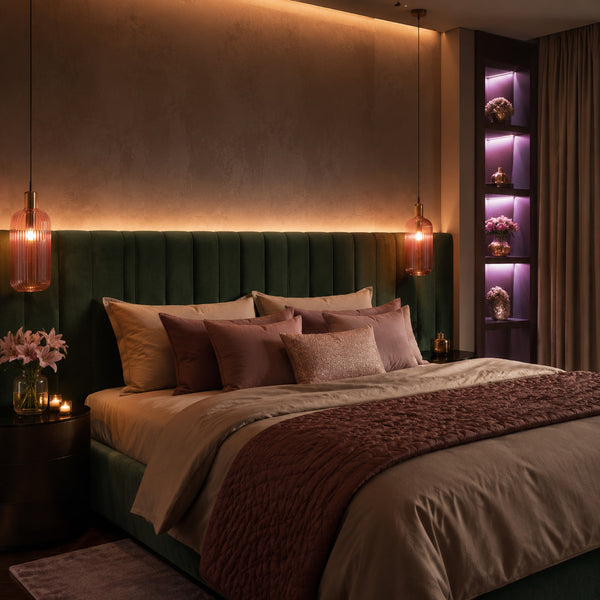
Bedroom lighting should encourage relaxation. Warm bedside lamps, wall-mounted reading lights, or pendant lights positioned beside the bed provide focused illumination without making the entire room excessively bright.
A soft central fixture can provide general light, while concealed lighting around wardrobes or headboards adds depth. Individually controlled bedside lights make the room more practical for different routines.
Bathroom Lighting
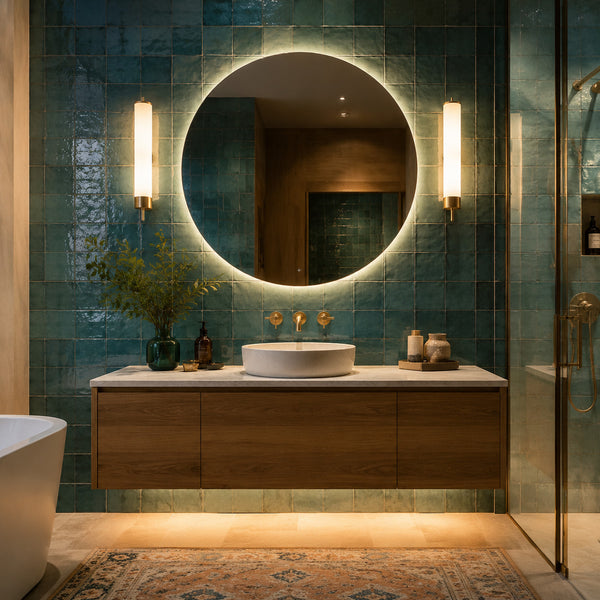
Bathrooms need a combination of clear facial lighting and comfortable ambient light. Fixtures positioned beside or around the mirror help minimize shadows, while a ceiling light provides general visibility.
Soft accent lighting beneath a vanity or inside a niche can create a calmer atmosphere. Every bathroom fixture should have an appropriate moisture and safety rating for its location.
Home Office Lighting
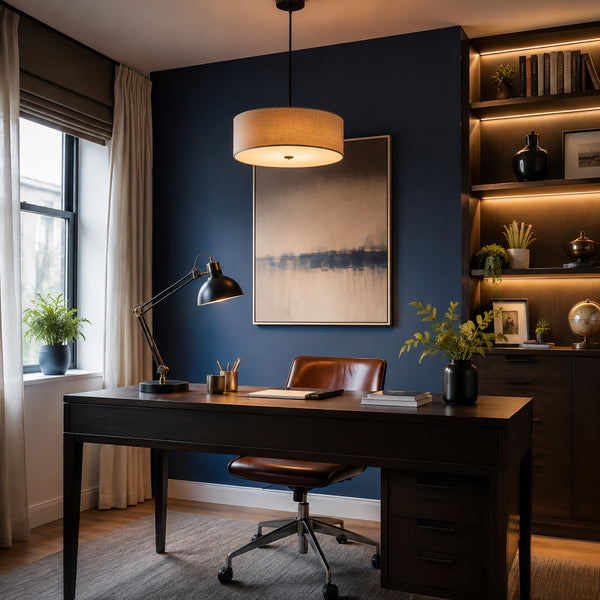
A home office needs focused illumination that supports concentration without creating screen glare. Position the desk near natural daylight when possible, but avoid placing a bright window directly behind the monitor.
An adjustable desk lamp supplies task lighting, while a floor lamp or ceiling fixture balances the surrounding brightness. Neutral light generally works well during productive daytime hours.
Create a Flexible Lighting Plan
The best lighting schemes are adaptable. Rather than asking one fixture to perform every function, combine several sources at different heights and control them independently.
With suitable color temperatures, layered illumination, and carefully positioned fixtures, every room can shift naturally from functional daytime use to a comfortable ambient setting in the evening.