
The Power of the Focal Point: How to Anchor Any Room’s Design
The Power of the Focal Point: How to Anchor Any Room’s Design
A thoughtfully designed room usually has one element that captures attention first. It may be a dramatic fireplace, a curated gallery wall, an oversized pendant light, a sculptural sofa, or an architectural feature with a distinctive material or texture. This visual anchor is known as the focal point.
A strong focal point gives the eye somewhere to rest and helps the remaining furniture, lighting, colors, and decorative objects feel connected. Without one, even a room filled with beautiful pieces can appear scattered or unfinished. The objective is not necessarily to create something extravagant, but to establish a clear visual hierarchy that makes the space feel balanced and intentional.
What Is a Focal Point?
A focal point is the main feature that naturally attracts attention when someone enters a room. It provides a starting point for the design and influences how other elements should be arranged.
Some rooms already contain an obvious architectural focal point, such as a fireplace, a large window, an exposed stone wall, or a distinctive staircase. In other spaces, the focal point must be created through furniture, artwork, color, lighting, or decorative composition.
The strongest focal points usually combine several qualities:
- A clear position within the room
- Enough scale to command attention
- Contrast in color, material, shape, or lighting
- A visual relationship with the surrounding furniture
- Sufficient breathing room to remain noticeable
Begin With the Room’s Existing Architecture
Before adding anything new, examine the architecture of the room. A stone fireplace, an arched doorway, built-in shelving, exposed beams, or a wall of windows may already provide the visual anchor the space needs.
If an attractive feature already exists, the design should support it instead of competing against it. Furniture can be directed toward the feature, lighting can emphasize its texture, and surrounding colors can be kept quieter so the architectural element remains dominant.
Even a simple wall can become significant when it occupies a central sightline or provides a natural backdrop for artwork, furniture, or decorative lighting.
Let One Feature Take the Lead
Rooms often feel chaotic when several elements compete for attention. A patterned rug, colorful sofa, dramatic gallery wall, oversized light fixture, and bold feature wall can all be attractive individually, but using them together without hierarchy may overwhelm the room.
Choose one dominant feature and allow the remaining elements to play supporting roles. Secondary features can still add character, but they should reinforce the principal focal point through complementary colors, repeated materials, or quieter shapes.
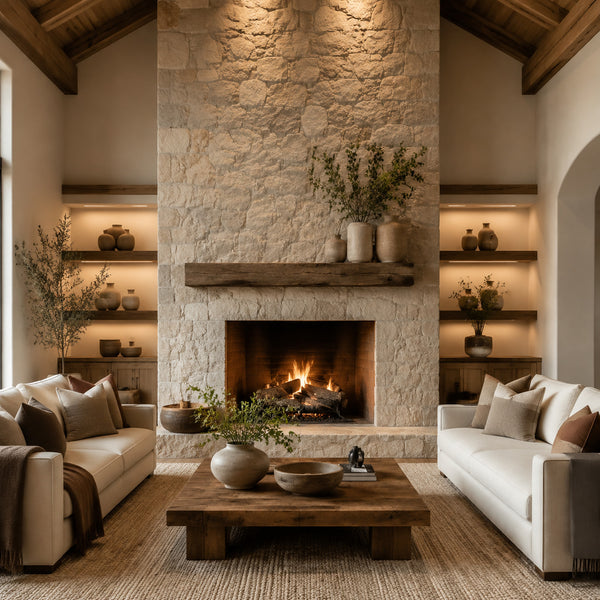
Use a Fireplace as a Natural Anchor
A fireplace is one of the most effective architectural focal points because it naturally suggests warmth, gathering, and symmetry. Stone, brick, timber, plaster, or decorative tile can make the fireplace even more visually distinctive.
Arrange the main seating so that it acknowledges the fireplace. This does not mean every chair must face it directly, but the furniture should form a composition around it. A centered coffee table, balanced armchairs, or matching sconces can strengthen the connection.
Keep the mantel carefully edited. A single artwork, mirror, sculptural vessel, or restrained collection often looks more intentional than numerous small decorations competing for space.
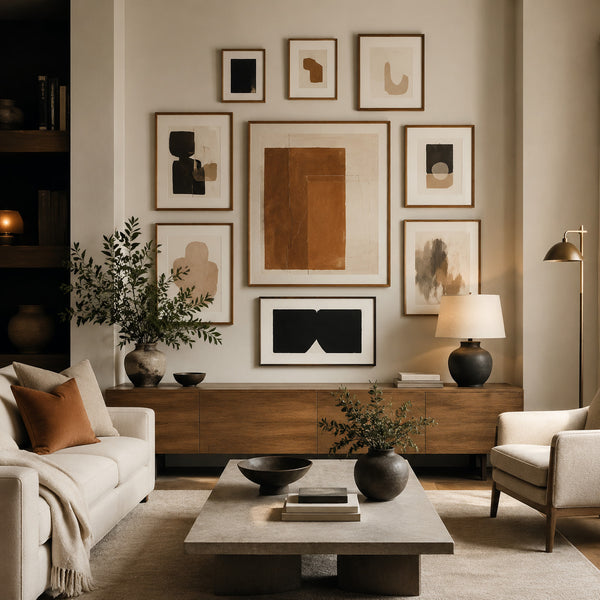
Create a Gallery Wall With a Clear Structure
A gallery wall can transform an ordinary surface into a focal point, but it needs visual structure. Begin with one larger central piece and arrange smaller artworks around it, or use a consistent grid for a cleaner and more contemporary appearance.
The frames do not need to match perfectly. Combining timber, black metal, aged brass, and painted finishes can create personality, provided there is a repeated element connecting the composition. This might be a shared color palette, similar spacing, or consistent artwork themes.
Before installing the pieces, arrange them on the floor or create paper templates on the wall. This makes it easier to test the scale and spacing without creating unnecessary holes.
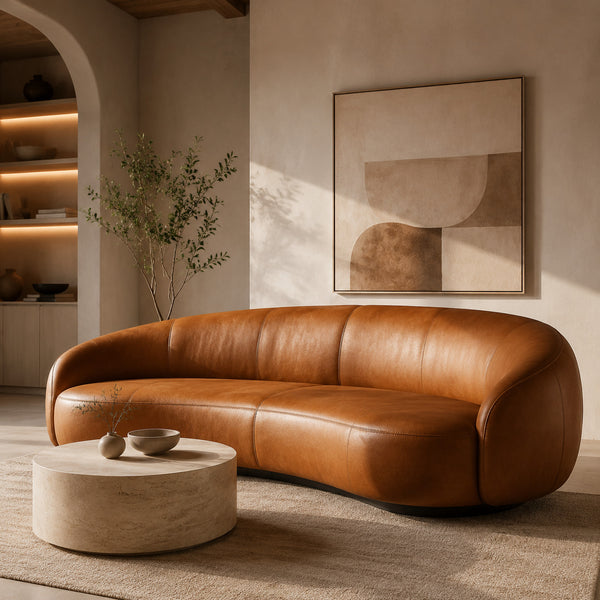
Choose Statement Furniture
Furniture can become the focal point when the architecture is understated. A sculptural sofa, an unusual vintage cabinet, a dramatic dining table, or a pair of distinctive lounge chairs can establish the character of the room.
Statement furniture is most effective when it has enough surrounding space to be appreciated. Avoid crowding it with too many side tables, accessories, or competing patterns. A restrained background allows its silhouette, material, and craftsmanship to stand out.
Repeat one of its colors or materials elsewhere in smaller doses. For example, a cognac leather sofa could be connected to the rest of the room through warm timber, amber glass, or a small leather accessory.
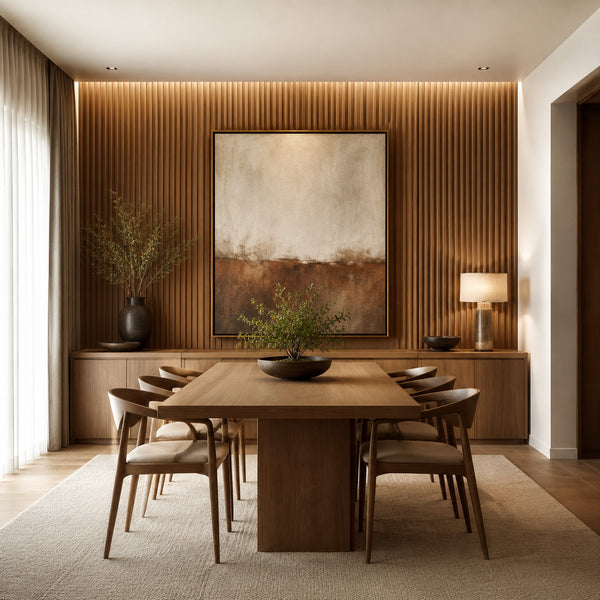
Highlight an Architectural Feature Wall
A feature wall does not have to rely on bright paint or elaborate wallpaper. Texture can create a more timeless focal point. Fluted timber, limewash, natural stone, decorative plaster, vertical paneling, or handmade tile can introduce depth without overwhelming the room.
Use the feature wall where it will be visible from the main entrance or primary seating area. It can frame a dining table, provide a background for artwork, or define a functional zone within an open-plan space.
For a cohesive result, repeat the material or color elsewhere in the room through furniture, flooring, shelving, or smaller decorative objects.
Use Lighting as the Main Feature
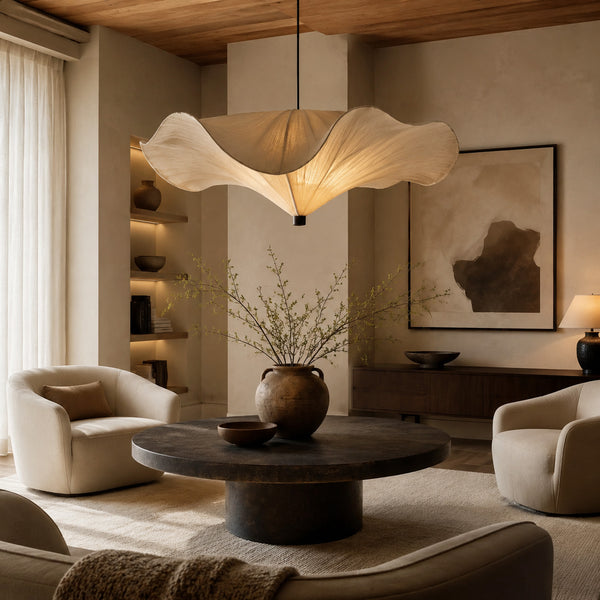
Lighting can function as both illumination and sculpture. An oversized pendant above a dining table, a cluster of glass lights in a stairwell, or a distinctive floor lamp beside a seating area can anchor the entire design.
The fixture should suit the scale of the room and the furniture beneath it. A small pendant may disappear above a large table, while an oversized fixture can make a modest room feel crowded.
Dimmers are especially useful because they allow the focal point to change character throughout the day. The light can provide practical brightness when needed and create a softer atmosphere in the evening.
Make the Bed the Bedroom’s Focal Point
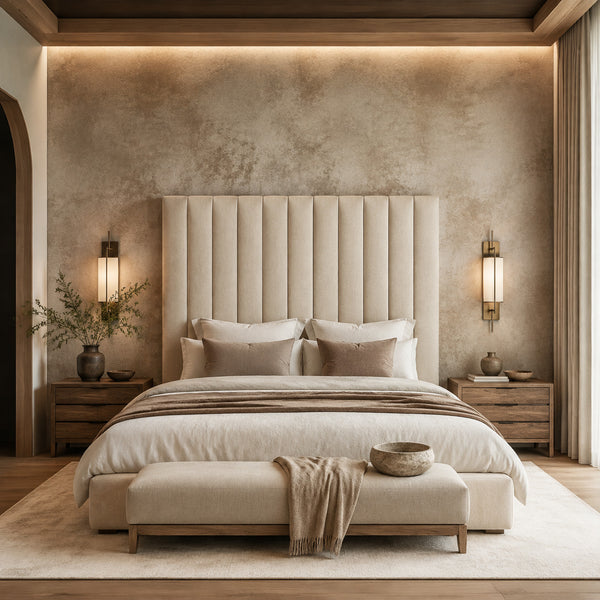
In most bedrooms, the bed is the natural focal point. A tall upholstered headboard, a textured wall, coordinated bedside tables, or symmetrical sconces can give it greater visual presence.
Layering bedding also helps establish hierarchy. Begin with a calm base, introduce texture through a coverlet or throw, and add a limited number of cushions in complementary tones. The objective is to make the bed inviting without making it look excessively decorated.
If the headboard is already dramatic, keep nearby artwork restrained. If the bed is simple, a large artwork or textured wall behind it can provide the missing visual weight.
Arrange Furniture to Support the Focal Point
Furniture placement should guide attention toward the room’s main feature. Sofas, chairs, tables, and rugs can form subtle visual lines that lead the eye in the desired direction.
In a living room, orient the principal seating toward the focal point or arrange it around a central axis. In a dining room, use the table, pendant light, and artwork as a coordinated composition. In a bedroom, align the bed with the most visually important wall whenever the room’s dimensions allow it.
Large rugs can help define this arrangement by visually connecting the main furniture and reinforcing the center of the composition.
Build Contrast With Color and Texture
A focal point must be different enough from its surroundings to attract attention. Contrast can be produced through dark and light tones, smooth and rough materials, curved and angular shapes, or matte and reflective finishes.
A pale stone fireplace may stand out against warm timber. A dark gallery wall can become more prominent in an otherwise neutral room. A velvet chair may provide a rich visual accent among linen upholstery and natural wood.
Contrast should feel deliberate rather than random. Connect the focal point to the rest of the room by repeating selected colors or materials in smaller details.
Consider Scale and Proportion
A common mistake is choosing a focal feature that is too small for the wall or furniture surrounding it. A tiny artwork above a wide sofa can appear disconnected, while an oversized piece may dominate a compact room.
Choose artwork, mirrors, lighting, and furniture in relation to the nearby architecture. A focal piece above a sofa or console should generally occupy a substantial portion of the available width without extending beyond the furniture beneath it.
Leave enough negative space around the feature. Empty space is not wasted space; it helps important elements remain visible and gives the composition a more refined appearance.
Check the Main Sightlines
Stand at the entrance to the room and notice where your attention naturally travels. Repeat the exercise from the principal seating area and from adjacent rooms. The focal point should be visible from at least one important sightline.
If the strongest feature is hidden behind furniture or positioned outside the natural field of view, consider adjusting the layout. Sometimes moving a sofa, rotating a dining table, or relocating artwork is enough to improve the entire composition.
Creating a Focal Point in a Plain Room
A room without distinctive architecture offers creative freedom. Several accessible options can establish a visual anchor:
- Hang one oversized artwork on the most visible wall.
- Create a gallery wall above a console or sofa.
- Introduce a sculptural piece of furniture.
- Install a dramatic pendant or floor lamp.
- Apply textured plaster, timber paneling, or a contrasting paint color.
- Use tall curtains to frame a window and emphasize ceiling height.
- Arrange a curated collection on open shelving.
Common Focal Point Mistakes
- Creating several equally dominant features in one room
- Choosing artwork or lighting that is too small for the space
- Placing furniture where it blocks an architectural feature
- Using contrast that is unrelated to the rest of the palette
- Overdecorating the main feature until it appears cluttered
- Ignoring the view from the room’s entrance
- Failing to leave sufficient space around statement furniture
A Simple Focal Point Checklist
- Identify the first feature visible when entering the room.
- Decide whether an existing architectural element should be emphasized.
- Select one primary focal point.
- Arrange furniture to acknowledge that feature.
- Use lighting to direct attention toward it.
- Add contrast through scale, color, material, or texture.
- Repeat selected details elsewhere for visual continuity.
- Remove nearby objects that compete unnecessarily.
- Review the composition from the room’s main sightlines.
Final Thoughts
A successful focal point gives a room visual clarity. It helps every other design decision—from furniture placement and lighting to color and accessories—feel more purposeful.
Whether the anchor is a fireplace, gallery wall, sculptural sofa, feature wall, pendant light, or statement headboard, the principle remains the same: choose one element to lead, arrange the room to support it, and give it enough space to make an impression. The result is a more balanced, comfortable, and intentional interior.