
Designing a Playful Kids’ Room That Grows with Your Child
Designing a Playful Kids’ Room That Grows with Your Child
A well-designed kids’ room should feel playful and welcoming today while remaining useful as the child grows. Instead of building the entire room around one temporary theme, combine a timeless foundation with adaptable furniture, accessible storage, interchangeable colors, and clearly defined areas for sleeping, playing, reading, and studying.
This flexible approach makes the bedroom easier to organize and update without requiring a complete redesign every few years.
1. Start with a Timeless Foundation
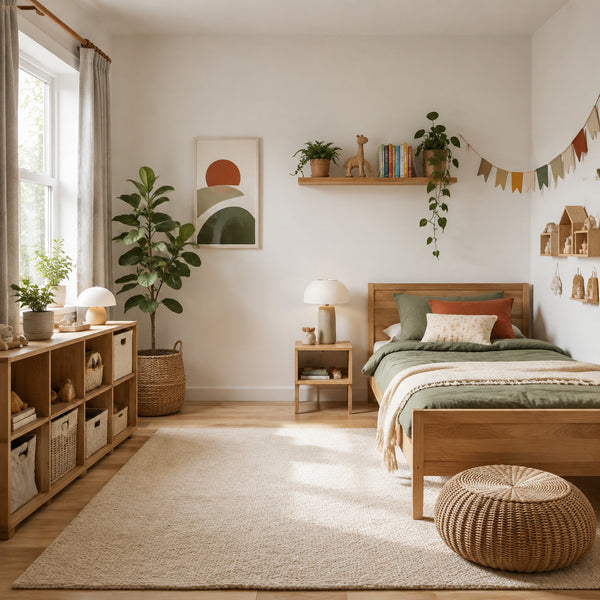
Use warm white, cream, pale beige, light grey, or a soft muted color across the main walls. A neutral background creates visual calm and allows bedding, toys, artwork, and accessories to introduce personality.
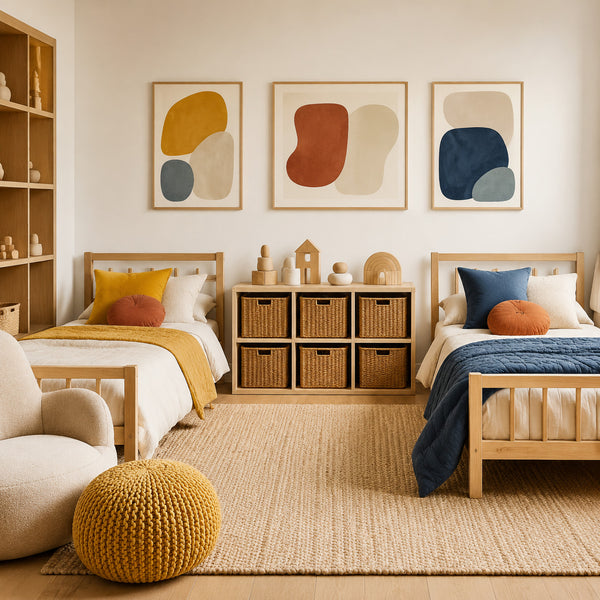
Natural wood furniture works particularly well because it can move easily from a young child’s room into a more mature bedroom. A simple wooden bed, neutral rug, practical bedside table, and understated curtains provide a foundation that will not quickly feel outdated.
2. Make Storage Accessible and Flexible
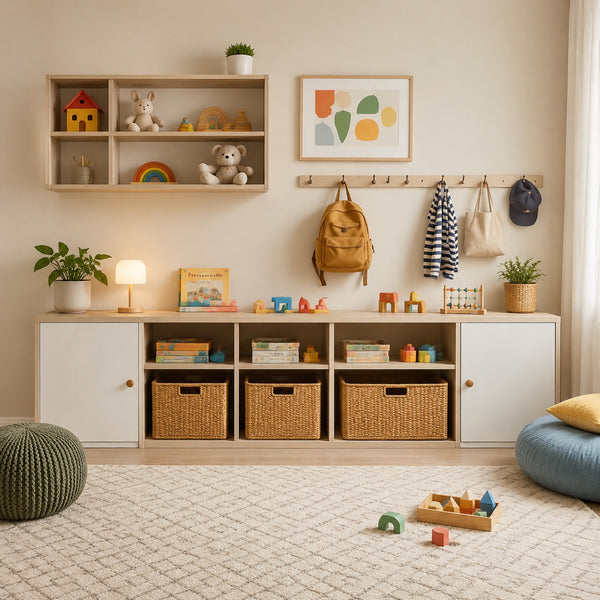
Children are more likely to participate in tidying when storage is easy to see and reach. Low modular cabinets, open cubbies, woven baskets, wall hooks, and shallow shelves allow everyday belongings to have clearly defined places.
Combine open and closed storage. Open shelves can display favorite toys and books, while cupboards and baskets conceal smaller pieces that might otherwise make the room appear cluttered.
- Use low baskets for frequently used toys.
- Reserve closed cabinets for less attractive supplies.
- Add wall hooks for bags, clothing, and accessories.
- Choose modular units that can be rearranged later.
- Leave some shelves empty to accommodate future belongings.
3. Invest in Furniture That Can Adapt
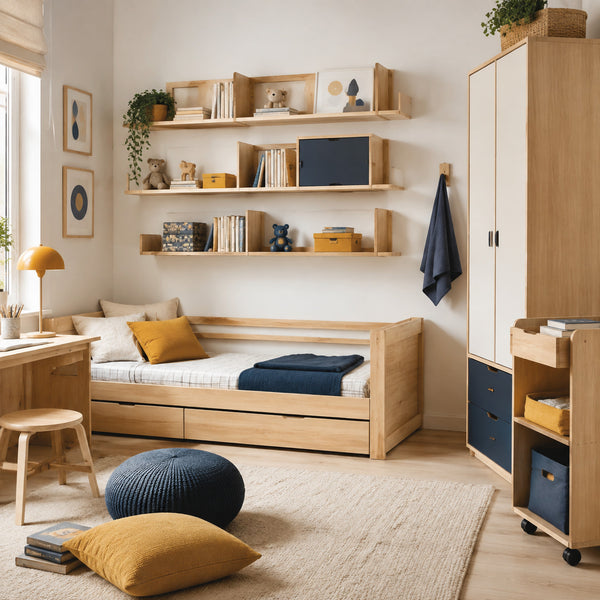
Convertible and multipurpose furniture reduces the number of major replacements needed as a child grows. An extendable bed, height-adjustable desk, modular shelving system, or daybed with storage drawers can serve several stages of childhood.
A small activity table may eventually become a homework desk, while a low toy cabinet can later store books, clothing, or creative materials. Focus on sturdy shapes and simple finishes rather than furniture decorated around a short-lived character or theme.
4. Add Personality with Interchangeable Accents
A neutral room does not need to feel plain. Bring in color through elements that are inexpensive and easy to replace, including cushions, bedding, curtains, lamps, storage boxes, rugs, and removable decorations.
Muted green, terracotta, mustard, dusty blue, and warm red can make the room lively without overwhelming it. As preferences change, these accents can be swapped while the main furniture and wall colors remain in place.
Abstract shapes, stars, animals, nature-inspired motifs, and geometric patterns create a playful atmosphere without tying the entire room to one narrow age group.
5. Divide the Room into Clear Zones
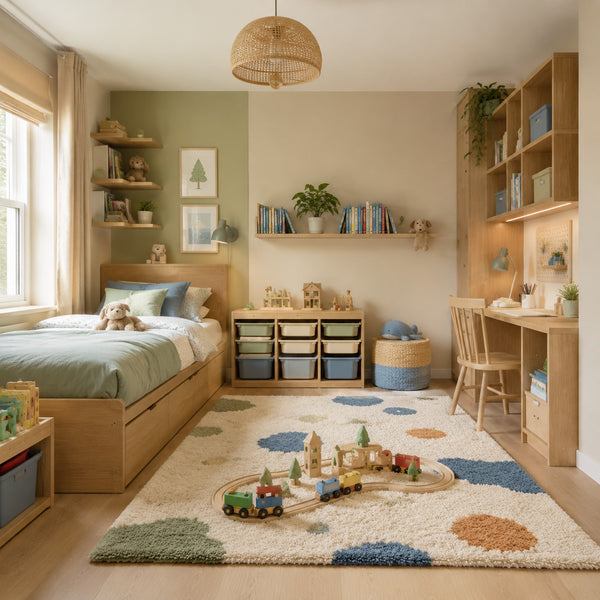
Even a compact bedroom can support several activities when the layout is organized into zones. Keep the sleeping area visually quiet, place toys and floor cushions in an open play area, and position the study space near natural light whenever possible.
- Sleep zone: Comfortable bed, soft lighting, and minimal distractions.
- Play zone: Open floor space, washable rug, and accessible toy storage.
- Study zone: Desk, supportive chair, task lamp, and organized supplies.
- Reading zone: Book ledges, comfortable cushions, and gentle lighting.
Using rugs, lighting, furniture placement, or subtle wall colors can define each area without installing physical partitions.
6. Create a Study Area That Changes over Time
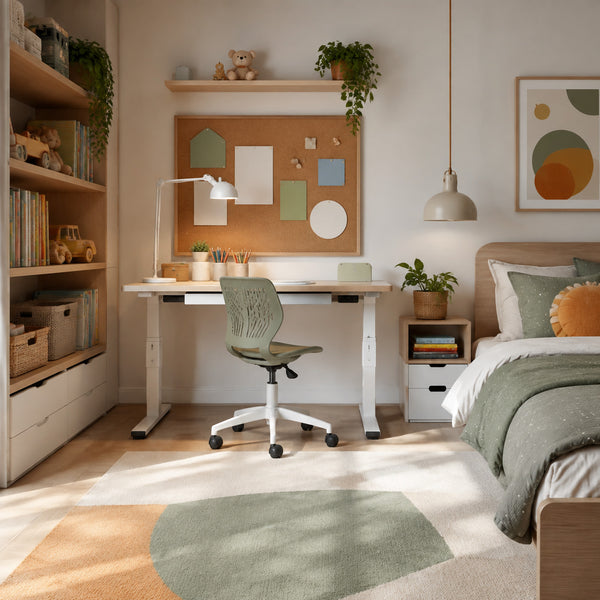
A dedicated workspace can begin as a place for drawing and crafts before developing into a homework station. Choose an adjustable desk and chair that can accommodate changes in height and support comfortable posture.
Keep pencils and supplies in simple containers, install shelves for books, and use a display board for artwork, notes, or schedules. Good task lighting is essential, particularly when the desk cannot be positioned beside a window.
A calm study corner with limited visual clutter helps separate focused activities from the more energetic play area.
7. Include a Comfortable Reading and Resting Corner
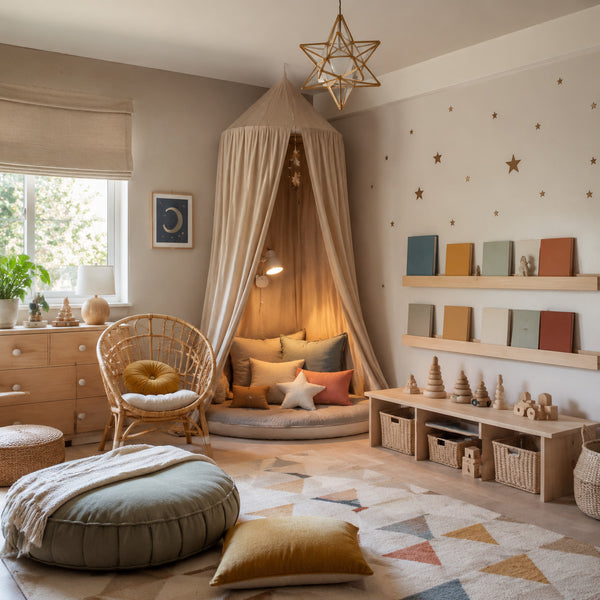
A reading nook gives the child a quiet place that is separate from the bed and desk. A fabric canopy, soft floor cushion, compact chair, book ledges, and warm lamp can transform an unused corner into an inviting retreat.
Mount books with their covers facing outward on low ledges so they remain visible and accessible. Add a few cushions and tactile fabrics, but leave enough open space for the nook to feel comfortable rather than crowded.
Keep the Room Playful but Adaptable
The most successful kids’ rooms balance imagination with practicality. A timeless background, flexible storage, adaptable furniture, replaceable accents, and dedicated activity zones allow the space to evolve naturally.
Rather than redesigning the entire room at every stage, individual details can change gradually. Toys can give way to books, the activity table can become a study desk, and playful accessories can be replaced with more mature pieces while the essential layout continues to work.