
Designing a Functional Entryway: Drop Zones That Are Equal Parts Stylish and Useful
Designing a Functional Entryway: Drop Zones That Are Equal Parts Stylish and Useful
The entryway may be one of the smallest areas in a home, but it handles an enormous amount of daily activity. Keys, coats, shoes, bags, mail, umbrellas, and everyday accessories all pass through this space. Without a clear system, even a beautiful foyer can quickly become cluttered and difficult to use.
A well-designed entryway creates a natural drop zone for everything that enters the home. The goal is not simply to add more storage, but to place the right storage exactly where each item is normally used. With a few practical elements, even a narrow hallway or compact foyer can become organized, welcoming, and visually balanced.
Begin With Your Everyday Routine
Before selecting furniture or accessories, consider what normally happens when you walk through the door. Do you remove your shoes immediately? Where do you leave your keys? Do children need somewhere to hang school bags? Does mail accumulate on the nearest surface?
Your answers reveal which features the entryway actually needs. A functional drop zone should respond to real habits rather than forcing the household to follow an inconvenient system.
- Provide hooks for coats, bags, hats, and frequently used accessories.
- Add a tray or small bowl for keys, wallets, and sunglasses.
- Include shoe storage near the entrance if shoes are removed indoors.
- Create a designated place for incoming mail and paperwork.
- Use a bench or stool when sitting down to remove shoes is helpful.
Use Vertical Space in a Small Foyer
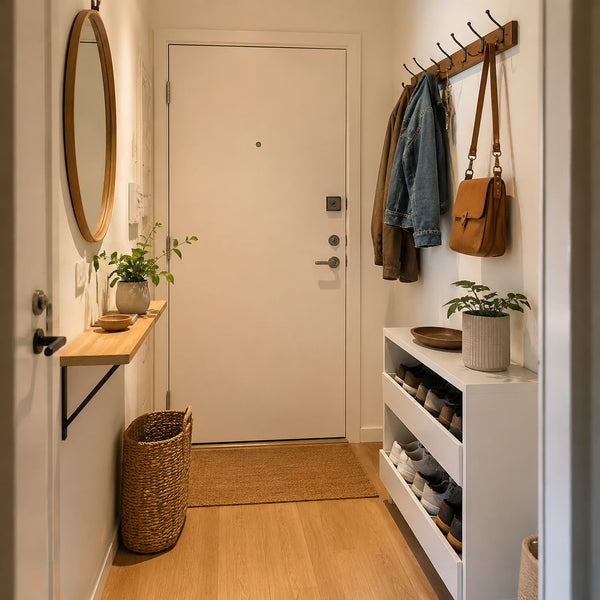
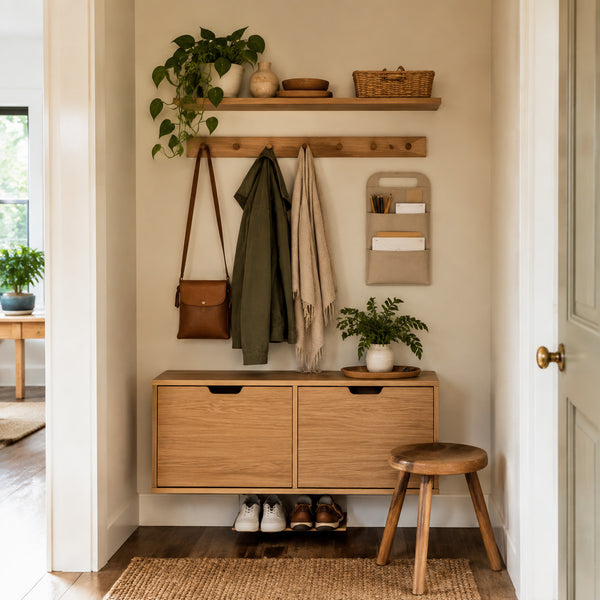
When floor space is limited, walls become the most valuable storage surface. A row of hooks, a peg rail, or a floating shelf can create a complete organization system without making the entryway feel crowded.
Position frequently used hooks at a comfortable height and reserve higher shelves for seasonal items or decorative baskets. A wall-mounted mail holder can keep letters away from the main surface, while a floating shelf provides a compact place for a catch-all tray and a few decorative objects.
Keeping furniture shallow is especially important in narrow entrances. Slim shoe cabinets, floating consoles, and narrow shelves preserve the walking path while still offering useful storage.
Create Practical Coat Storage
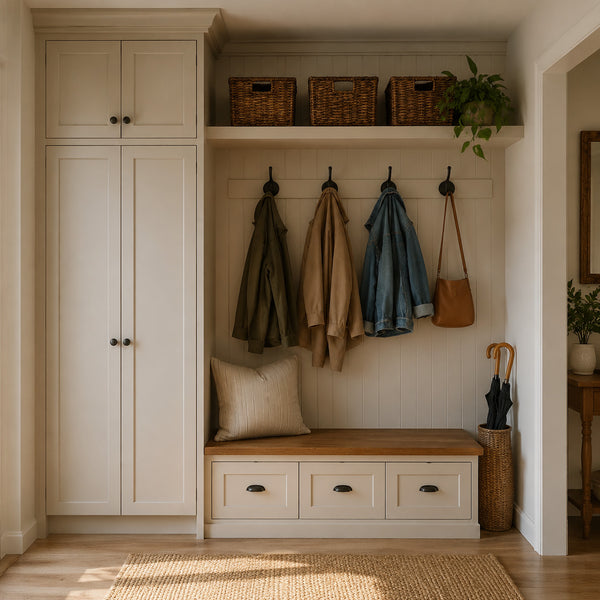
Coat storage should reflect both the size of the space and the amount of clothing used regularly. Open hooks make everyday coats easy to reach and encourage family members to put things away quickly. Closed wardrobes create a calmer appearance by hiding bulkier clothing and visual clutter.
A combination of open and closed storage often works best. Keep current coats and bags on accessible hooks, then place seasonal or less frequently used pieces inside a slim wardrobe. An upper shelf with labeled baskets can hold gloves, scarves, hats, and other small accessories.
Add a Catch-All Tray for Small Essentials
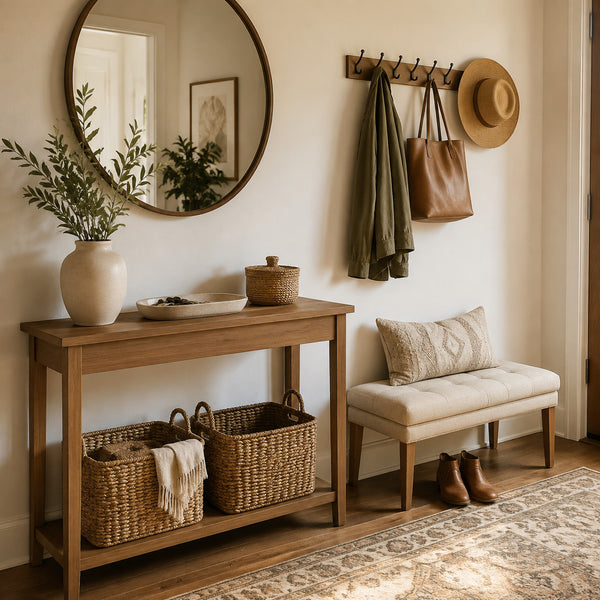
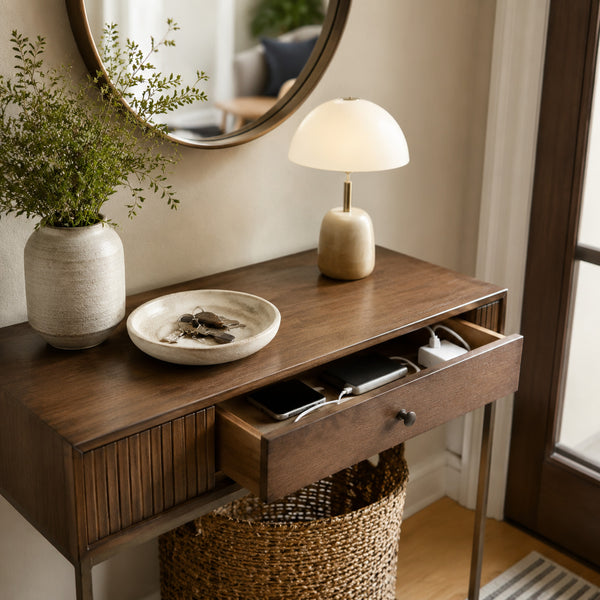
A catch-all tray is one of the simplest and most effective additions to an entryway. It gives keys, coins, sunglasses, and other pocket-sized objects a permanent home, preventing them from spreading across the console.
Choose a tray that complements the surrounding materials. Ceramic, wood, stone, metal, or woven designs can introduce texture while keeping the surface organized. If several people use the entryway, separate compartments or individual trays can make the system even easier to maintain.
Include Seating Without Wasting Space
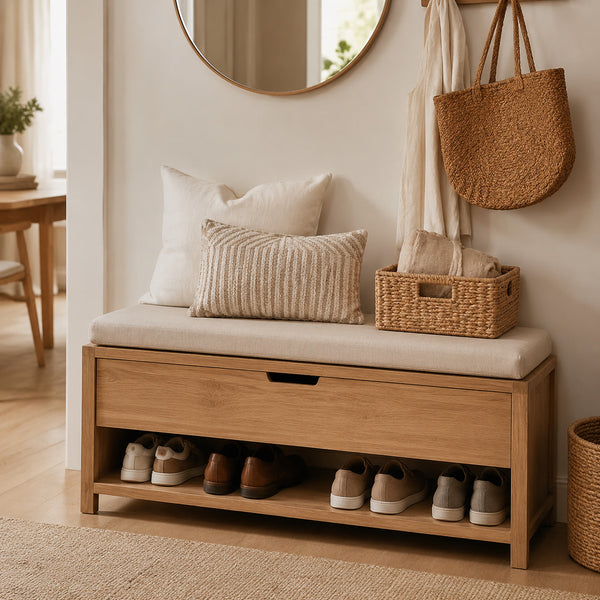
A bench makes an entryway more comfortable and can also provide valuable storage. Look for designs with drawers, lift-up seats, shelves, or open compartments underneath. Shoes can remain accessible without being scattered across the floor.
In a very small foyer, a compact stool, narrow bench, or wall-mounted folding seat may provide enough functionality. Upholstered seating softens the space, while wood or woven designs introduce natural texture and are generally easy to maintain.
Control Shoe Clutter
Shoes are often the main source of entryway disorder. The right solution depends on how many pairs must remain near the door and how much floor space is available.
- Use a slim, closed shoe cabinet for a clean and streamlined appearance.
- Place everyday shoes on an open shelf beneath a bench.
- Add baskets for children's shoes or casual footwear.
- Use a washable tray for wet or muddy shoes.
- Move seasonal and rarely worn footwear to another storage area.
Limiting the number of shoes kept in the entryway prevents the area from becoming overloaded. Only the pairs currently used should occupy this valuable space.
Organize Mail, Charging, and Technology
Modern entryways often need to accommodate more than coats and shoes. A small drawer can conceal charging cables, portable batteries, earbuds, and other technology used outside the home.
If mail enters through the front door, provide separate places for items that require action, documents that must be filed, and paper that can be recycled. A simple wall organizer or divided tray prevents paperwork from taking over the console.
Balance Open and Closed Storage
Open storage is convenient, but too much of it can make a compact entrance feel visually busy. Closed cabinets and drawers hide practical items, while selected open elements keep daily necessities accessible.
A useful balance might include hooks for current coats, a tray for keys, a closed shoe cabinet, and baskets for smaller accessories. Decorative objects should be limited so that functional storage remains the priority.
Use Mirrors and Lighting to Improve the Space
A mirror is both decorative and practical in an entryway. It provides a convenient final check before leaving the home and reflects light, helping a small or windowless foyer appear more open.
Good lighting is equally important. Combine general ceiling illumination with a table lamp, wall sconce, or subtle integrated light where possible. Warm lighting creates a welcoming atmosphere, while focused light helps when locating keys, fastening shoes, or sorting mail.
Choose Durable, Easy-to-Clean Materials
Entryways experience more dirt, moisture, and wear than many other parts of the home. Select finishes that can tolerate frequent use. Washable rugs, wipeable paint, durable flooring, sturdy hooks, and easily cleaned upholstery will keep the area looking attractive for longer.
Natural materials such as wood, stone, woven baskets, and ceramics can make practical storage feel warmer and more intentional. Repeating a limited selection of materials also prevents a small entryway from looking cluttered.
Common Entryway Mistakes to Avoid
- Choosing furniture that is too deep for the available walking space.
- Providing hooks but no storage for shoes or small accessories.
- Keeping too many seasonal items near the entrance.
- Covering every surface with decorative objects.
- Using open storage for items that naturally look untidy.
- Ignoring lighting in a dark or enclosed foyer.
- Creating a system that does not match the household's daily habits.
A Simple Functional Entryway Checklist
A practical entryway does not require a large renovation. Begin with the essentials and add more storage only when it solves a specific problem.
- A hook or hanger for each regular user
- A permanent place for keys and wallets
- Controlled storage for everyday shoes
- A basket or drawer for smaller accessories
- A comfortable place to sit when space permits
- A mirror and adequate lighting
- A system for incoming mail and paperwork
- Enough empty surface space to keep the area visually calm
Final Thoughts
The best entryways combine organization with a sense of welcome. Every element should have a clear function, but practical storage does not need to feel purely utilitarian. Coordinated baskets, warm lighting, natural materials, a carefully chosen mirror, and a few decorative details can turn an everyday drop zone into an attractive introduction to the home.
By designing around real routines and giving each frequently used item a permanent place, even the smallest foyer can remain stylish, useful, and easier to maintain.