
Designing for the Senses: How Scent, Sound, and Touch Transform a House Into a Home
Designing for the Senses: How Scent, Sound, and Touch Transform a House Into a Home
A beautiful interior is not experienced through sight alone. The scent of a room, the sounds absorbed or amplified by its surfaces, and the textures we touch all influence how comfortable and welcoming a home feels. By designing for several senses at once, even a simple room can become calmer, warmer, and more personal.
Introduce Scent Without Overwhelming the Room
Scent can establish the atmosphere of a room before its furniture or colors are fully noticed. The most comfortable interiors usually rely on subtle fragrances rather than one powerful aroma throughout the entire house.
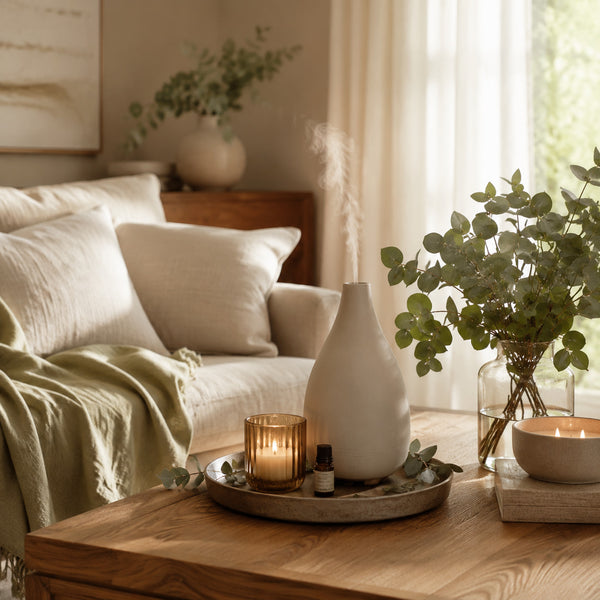
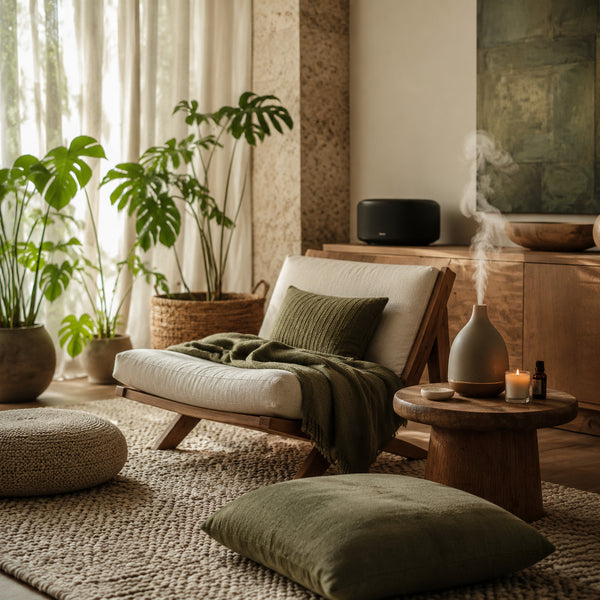
- Use a ceramic essential oil diffuser to distribute a light and consistent fragrance.
- Choose fresh or herbal notes for kitchens, entrances, and workspaces.
- Reserve softer woody, linen, lavender, or vanilla-inspired scents for bedrooms and living rooms.
- Combine scented elements with fresh eucalyptus, herbs, flowers, or other natural botanicals.
- Avoid mixing too many competing fragrances within the same space.
The objective is not to make the fragrance the main feature. It should quietly support the character and intended use of the room.
Use Textiles to Create a Softer Soundscape
Rooms containing large windows, bare floors, and hard surfaces can produce echoes that make the interior feel cold or unsettled. Textiles help absorb excess sound while adding visual warmth.
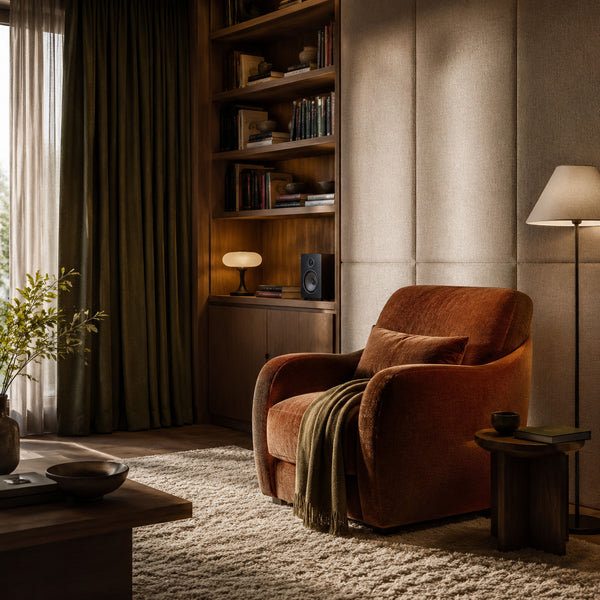
- Floor-length curtains soften windows and reduce reflections from glass.
- Wool rugs and layered floor coverings absorb sound in living and dining areas.
- Upholstered chairs, fabric sofas, and cushions reduce the number of exposed hard surfaces.
- Bookshelves filled with books and decorative objects help interrupt sound waves.
- Decorative acoustic panels can be integrated into offices, media rooms, and reading areas.
Quiet does not have to mean silence. A discreet speaker with soft instrumental music, natural sounds, or a familiar playlist can give a room its own emotional rhythm.
Layer Tactile Materials
Texture gives neutral interiors depth and prevents restrained color palettes from feeling flat. The most inviting rooms combine materials with noticeably different surfaces.
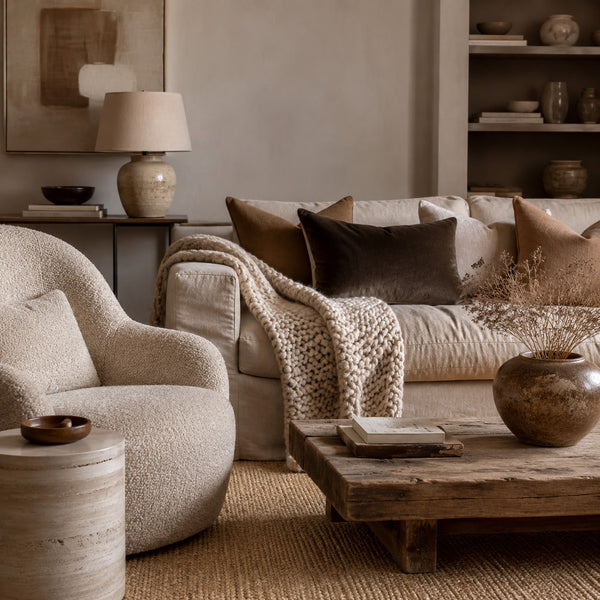
- Pair soft boucle seating with smooth stone or ceramic tables.
- Layer linen cushions with velvet or knitted accents.
- Place woven rugs beneath furniture made from aged or distressed wood.
- Use baskets, handmade pottery, and natural fibers to introduce irregular textures.
- Add tactile throws where they can be reached and used rather than displayed only as decoration.
A limited palette allows several textures to coexist without making the room appear cluttered. Contrast is more important than the number of materials used.
Create Comfort Through Layered Lighting
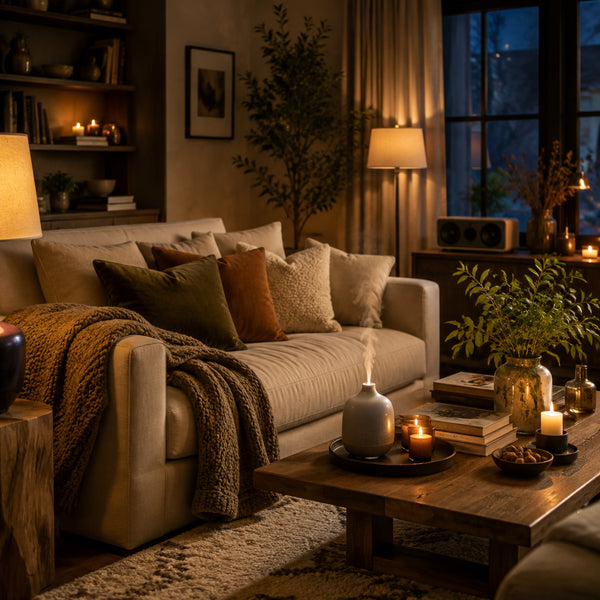
Lighting affects how every texture and color is perceived. One bright ceiling light rarely creates a comfortable atmosphere, so combine several smaller sources positioned at different heights.
- Use general ambient lighting to provide comfortable overall visibility.
- Add floor and table lamps near sofas, beds, and reading chairs.
- Include task lighting where focused work takes place.
- Use wall lights or discreet accent lighting to reveal architectural textures.
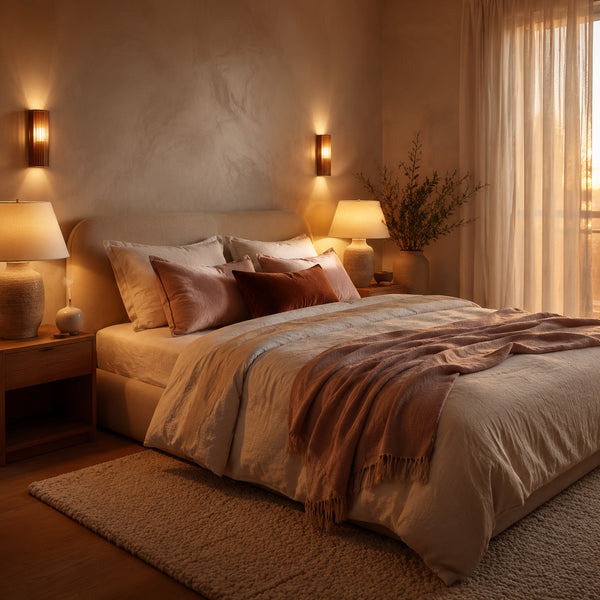
- Select warm, lower-intensity illumination for evening relaxation.
Candles can add a gentle moving light, while dimmers make it easier to adapt the same room for conversation, reading, entertaining, or rest.
Design Each Room Around Its Intended Feeling
Living Room
Combine a textured rug, comfortable upholstery, layered cushions, soft curtains, subtle fragrance, and several warm light sources. These elements make the room feel suitable for both conversation and quiet relaxation.
Bedroom
Prioritize breathable bedding, soft rugs, blackout curtains, warm bedside lighting, and a restrained calming scent. Keep unnecessary electronic sounds and harsh illumination away from the sleeping area.
Home Office
Balance practical task lighting with acoustic textiles, an ergonomic chair, natural materials, and a fresh but subtle fragrance. A controlled soundscape can improve concentration without making the room feel sterile.
Entryway
Use the entrance to establish the sensory identity of the home. A textured runner, a wooden console, a ceramic bowl, soft lighting, and a clean fragrance create an immediate feeling of welcome.
A Simple Sensory Checklist
- What is the first scent noticed when entering the room?
- Does the space echo or feel acoustically comfortable?
- Are there contrasting materials that invite touch?
- Can the lighting be adjusted for different activities?
- Do the sound, scent, texture, and light support the purpose of the room?
A house begins to feel like a home when its atmosphere supports everyday life. By coordinating scent, sound, touch, and lighting with the visual design, each room becomes more comfortable, memorable, and emotionally connected to the people who use it.