
Turn Your Home Office into a Personalized Fitness & Wellness Studio with Bio-Adaptive Design, Wearables, and Modular Furniture
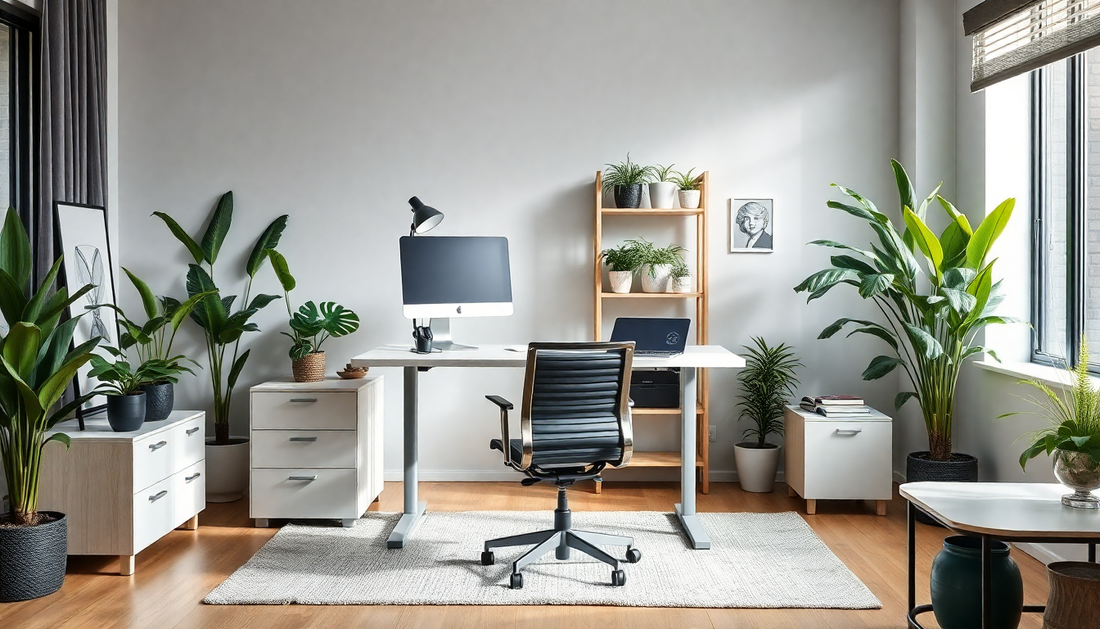
Introduction: Why Transform Your Home Office Now
Work-from-home has matured into a long-term lifestyle for millions. In 2025, the smartest home offices go beyond desks and monitors: they become adaptable environments that support productivity, movement, recovery, and mental wellbeing. Converting your home office into a personalized fitness and wellness studio is about removing friction between the demands of work and the needs of your body and brain. This expanded guide explains the science-backed principles, recommended hardware and software, detailed layouts, automation strategies, routines, privacy best practices, and troubleshooting tips to help you design a space that truly adapts to you.
What You’ll Get from This Guide
- A deep-dive into bio-adaptive design and why it matters for health and performance.
- How to use wearables and sensors to personalize your daily routine.
- Modular furniture strategies for small and large spaces, budget recommendations, and shopping tips.
- Step-by-step, weekend-friendly setup plan and phased rollout approach.
- Automation recipes and integrations with common smart home platforms.
- Sample schedules, micro-workouts, and recovery protocols that fit a busy workday.
- Privacy, data security, and maintenance guidance to keep your system useful long-term.
Section 1: Principles of Bio-Adaptive Design
Bio-adaptive design centers on the idea that the built environment should respond to human biology. Rather than imposing a one-size-fits-all workspace, a bio-adaptive office adjusts light, temperature, acoustics, and layout to support circadian rhythms, movement variability, cognitive demands, and recovery. Key principles include:
- Circadian alignment: Lighting and daily schedules that support your natural sleep-wake cycle.
- Movement integration: Easy opportunities for frequent low-intensity activity and short strength or mobility sessions.
- Sensory optimization: Manage noise, clutter, and visual stimuli to reduce cognitive load.
- Personalization and feedback: Use wearable data to adapt intensity and timing for workouts and breaks.
- Modularity: Furniture and layout that change roles rapidly so the same footprint supports work, exercise, and rest.
Why These Principles Improve Results
Small, frequent movement boosts metabolic health, reduces musculoskeletal pain, and improves attention. Circadian lighting improves sleep quality and daytime focus. Personalized data reduces guesswork: HRV-guided decisions help you avoid overreaching on high-stress days and maximize performance when recovered. Modularity reduces friction: the easier it is to start a 7-minute routine, the more likely you are to do it.
Section 2: The Right Wearables and Sensors
Wearables are the bridge between subjective feeling and objective action. The right set of sensors will help you know when to push, when to step back, and how to plan your day.
Essential Metrics to Track
- Heart rate variability (HRV): A marker of autonomic balance and recovery. Trends over days are more useful than single readings.
- Resting heart rate (RHR): Useful for tracking fitness improvements and detecting illness or overtraining.
- Sleep duration and quality: Time in deep and REM sleep, sleep interruptions, and sleep timing.
- Activity and steps: Total daily movement and intensity distribution.
- Stress indicators: Skin conductance, continuous heart rate, or breathing rate where available.
- Environment sensors: Light levels, temperature, humidity, CO2 concentration, and VOCs can all affect cognition and recovery.
Recommended Wearables and Sensors (Categories)
- Multimodal smartwatches: Continuous heart rate, sleep, activity, and basic HRV measures.
- Dedicated HRV trackers: Chest straps or finger sensors that provide clinical-grade HRV readings for short daily measurements.
- Sleep systems: Under-mattress sensors or bedside devices for longitudinal sleep quality tracking.
- Environmental monitors: CO2 and particulate sensors plus a smart thermostat for temperature automation.
- Motion sensors: Passive infrared or IMU sensors to detect sitting time and automatic micro-break cues.
How to Use the Data
- Establish baselines over 2–4 weeks for HRV, RHR, and sleep.
- Create simple rules: for example, if HRV is below your 2-week average by more than X%, favor restorative sessions; if it's above, do higher intensity or strength-focused work.
- Use sleep data to shift meeting density and lighting intensity the next day.
- Track trends monthly rather than obsessing over daily variation.
Section 3: Modular Furniture and Space Planning
Modular furniture is the most tangible way to make your office multi-functional. The goal is to keep the transition time between work, movement, and recovery under 30 seconds.
Key Furniture Pieces and Features
- Height-adjustable desk: Electric or mechanical; wide enough to accommodate a laptop and a small fitness band or dumbbell set.
- Fold-down or wall-mounted bench: Doubles as seating and a platform for step-ups, single-leg pistols, or incline push-ups.
- Retractable or rollable flooring: Cushioned tiles or an exercise mat that stores under a desk or behind a cabinet.
- Mobile storage cart: Holds bands, dumbbells, foam roller, yoga blocks, and plugs into a charging hub.
- Monitor arms and track systems: Free up desk real estate quickly and allow for quick reorientation of screens.
- Multipurpose seating: Ergonomic chair that rotates to a recovery position, an active stool, or a reclining lounge for breaks.
Design Solutions for Small Spaces
- Mount resistance bands and a suspension trainer anchor to a door frame or wall to avoid floor clutter.
- Choose collapsible or nested equipment: adjustable dumbbells, foldable benches, and stackable plyo boxes.
- Use vertical storage: pegboards, wall rails, and magnetic strips keep equipment off the floor.
- Multi-use furniture: a bench that doubles as extra seating for clients or as a step-up platform for fitness.
Section 4: Lighting, Acoustics, Air, and Biophilia—The Invisible Infrastructure
These environmental systems have outsized effects on cognition, mood, and physical health. Treat them as essential tools, not optional accessories.
Lighting: Tunable and Zone-Based
- In the morning, increase light intensity and bias toward cool white light to boost alertness. Aim for 300–1,000 lux at eye level for short periods of bright exposure if possible.
- During focused afternoon work, maintain moderate cooler-white light to preserve alertness without overstimulation.
- In the evening, shift to warm light below 300 lux and reduce blue light exposure 60–90 minutes before bed.
- Use task lights for desk work and a portable light box for days when natural light is insufficient.
Acoustics and Soundscaping
- For video calls, use a directional microphone and a small acoustic panel behind your webcam to reduce echo.
- Create a calm recovery zone with soft furnishings, a small white noise machine, or ambient nature sound playlists.
- For concentration, consider binaural or pink-noise generators that improve focus without being distracting.
Air Quality and Thermal Comfort
- CO2 can rise quickly in small rooms. Use a CO2 monitor and a portable HEPA filter or bring in fresh air when levels exceed recommended thresholds.
- Maintain thermal comfort for performance: slightly cooler for cognitive tasks and slightly warmer for recovery tasks like stretching or mobility.
- Humidity between 40% and 60% tends to be best for respiratory comfort and sleep onset.
Biophilia and Plant Selection
- Plants improve perceived air quality, reduce stress, and add visual contrast. Choose low-maintenance species like pothos, snake plant, ZZ plant, or spider plant.
- Position taller plants to create soft visual divisions between zones without blocking light.
Section 5: Automation and Integration Strategies
Automation reduces decision friction. Set up automations that respond to your wearable signals, time of day, or calendar events.
Smart Home Platforms and How They Help
- Use a mainstream smart home platform to coordinate lighting, thermostats, speakers, and air purifiers.
- Integrate wearable app triggers where possible to change room states based on recovery metrics, such as dimming lights during a planned wind-down when your wearable indicates low HRV and poor sleep last night.
- Calendar-aware automations can reserve movement windows and set a focused mode during deep work periods.
Practical Automation Recipes
- Start-Up Routine: 30 minutes before your first scheduled meeting, lights ramp up to a bright cool-white setting, desk raises to standing height, and ambient focus music begins at low volume.
- HRV Low Alert: If morning HRV is below threshold, lights stay warmer, meeting-heavy blocks are reduced, and a 10-minute guided breathwork session is pushed to your phone.
- Movement Cue: After 50 minutes of continuous sitting detected by motion sensors, a gentle haptic reminder and a chime prompt a 5-10 minute mobility routine while the desk automatically lowers or raises to the preferred height.
- Wind-Down: 60 minutes before bedtime, a rule dims lights, disables notifications, and starts a short restorative audio sequence or meditation.
Section 6: Build-It-In-A-Weekend — Detailed Setup Plan
This phased plan gets you functional fast, then lets you refine over 30–90 days.
Day 1: Planning and Declutter
- Measure your room and sketch three zones: work, move, recovery. Identify a 2m x 2m or larger clear area for movement.
- Declutter: remove items not used frequently and create a staging area for equipment.
- Decide on a primary automation platform and download companion apps for your wearable and smart devices.
Day 2: Core Furniture and Layout
- Install height-adjustable desk and monitor arms.
- Set up the move zone with rollable mat or tiles, pegboard for bands, and a small equipment cart.
- Place recovery seating and light therapy lamp in a low-traffic corner.
Day 3: Sensors, Lighting, and Sound
- Install tunable bulbs and program simple schedules.
- Place CO2 and air quality monitors, and set a HEPA filter on a recommended cadence.
- Install acoustic panels or temporary soft materials to reduce echo and create a calming acoustic environment.
Day 4: Wearable Calibration and First Automation
- Start two-week baseline tracking for HRV, sleep, and activity.
- Create one or two automations: a morning startup and a movement cue.
- Test a 10-minute work-break routine and refine equipment placement for quick access.
Weeks 2–6: Iterate and Optimize
- Review wearable trends weekly and adjust thresholds.
- Try micro-workout variations and track perceived exertion and mood outcomes.
- Adjust lighting schedules seasonally and tune acoustics as needed.
Section 7: Sample Daily Schedules and Routines
Below are sample schedules tailored to common roles and constraints. Pick one and modify to match your personal metrics and calendar.
Schedule A — The Knowledge Worker (8–6 Day)
- 06:45 — Wake, 2–5 minutes light therapy if needed; short mobility sequence.
- 07:30 — 20-minute strength or interval session if HRV indicates recovery; otherwise, a 15-minute mobility + breathwork session.
- 08:30 — Work block 90–120 minutes with tunable cool light and sit-stand cycling.
- 10:45 — 10-minute movement break: band circuits or desk push-ups.
- 12:30 — Lunch walk or under-desk pedaling; brief social break for mood.
- 15:00 — 10-minute flow break: breathwork or meditation based on stress metrics.
- 17:30 — Short resistance session or yoga flow, then recovery routine with heat or compression if available.
- 21:00 — Wind-down: dim light, reduce screens, light stretching before bed.
Schedule B — The Parent With Split Shifts
- 05:45 — 15-minute mobility + bodyweight strength while kids are asleep.
- 08:00 — Short focused work block; schedule meetings in consolidated blocks to preserve movement windows.
- 12:00 — Family walk; use this as primary cardio and social time.
- 16:00 — 10-minute movement cue during afternoon slump; guided breathwork if HRV is low.
- 20:00 — 20-minute restorative yoga and sleep hygiene routine.
Section 8: Micro-Workouts and Program Design
You don’t need long workouts to make big gains. Consistency and progressive overload matter more than duration.
Effective Micro-Workouts
- EMOM Strength: Every minute on the minute for 12 minutes — alternate squats and push variations at a moderate load.
- Tabata Mobility: 8 rounds of 20 seconds work, 10 seconds rest rotating through hip opening and thoracic mobility drills.
- Desk HIIT: 10 minutes alternating 30-second high-effort under-desk pedaling with 30 seconds easy.
- Isometric Holds: 3 sets of 30–60 second wall sits or plank holds for strength and posture maintenance.
Progression and Tracking
- Increase reps or load every 2–3 weeks; for cardio, increase intensity or duration incrementally.
- Use your wearable to track heart rate zones and recovery; favor strength on higher HRV days and mobility/restoration on lower HRV days.
Section 9: Recovery Tools and Practices
Recovery is a competitive advantage. Make it a priority.
Accessible Recovery Tools
- Foam roller and massage ball for myofascial release.
- Percussion device or compact massager for brief post-work sessions.
- Compression sleeves for legs or arms if you have circulatory concerns or long sitting periods.
- Light therapy lamp for energy boosts and sleep phase shifting on low-light days.
Simple Recovery Protocols
- 5-Minute Reset: Foam roll calves and upper back, 2 rounds of diaphragmatic breathing.
- 15-Minute Evening Wind-Down: Warm shower, 7–10 minutes of restorative stretching, low-warm lighting, and a short meditation.
- Active Recovery Day: Prioritize gentle mobility, walking, and restorative yoga when wearable data suggests poor recovery.
Section 10: Privacy, Security, and Ethical Considerations
Health data is sensitive. Protect your privacy and treat integrations thoughtfully.
Practical Privacy Tips
- Use strong unique passwords and two-factor authentication for wearable and smart home accounts.
- Minimize data sharing by keeping automations local when possible and reviewing third-party app permissions regularly.
- Encrypt backups of any exported health data and only share data with trusted professionals.
- Consider a separate network or VLAN for IoT devices to reduce security risk to primary devices.
Ethical Use at Home
Be mindful of consent. If other household members share the space, get agreement before enabling sensors or cameras that might capture them. Share summaries of what data is collected and how it is used.
Section 11: Troubleshooting and Common Pitfalls
Even the best systems need troubleshooting. Here are common issues and quick fixes.
Problem: I Never Use the Equipment
- Simplify: remove or hide equipment that creates visual clutter and keep one go-to piece accessible.
- Commit to micro-habits: three 5-minute sessions per day for two weeks to create habit momentum.
- Use calendar blocks and accountability with a colleague or partner.
Problem: My Automations Miss or Trigger at Wrong Times
- Check sensor placement and recalibrate thresholds based on your baseline data.
- Introduce a manual override or 'Do Not Disturb' mode for focused work.
- Log edge cases and adjust rules rather than abandoning the automation.
Problem: Wearable Data Is Overwhelming
- Pick 1–2 metrics to optimize for 30 days, for example HRV and sleep duration.
- Avoid day-to-day volatility by looking at weekly averages.
- Use coach or guided programs in the wearable app for structured recommendations.
Section 12: Budget and Sourcing Guide
Practical buying guidance by budget tier so you can plan investment and ROI.
Entry Level: Smart + Simple ($)
- Used or budget sit-stand desk, resistance bands, basic smartwatch or phone apps, LED smart bulbs, and a potted plant.
- Estimated range: $200–$800 depending on deals and used gear availability.
Midrange: Functional and Comfortable ($$)
- Electric sit-stand desk, adjustable dumbbells, under-desk elliptical, HRV-capable wearable, HEPA air purifier, and simple acoustic panels.
- Estimated range: $800–$2,500 depending on brands and features.
Premium: Integrated and Automated ($$$)
- High-end electric desk, dedicated strength system or smart mirror, multi-sensor environment monitoring, advanced wearables, and full circadian lighting and HVAC integration.
- Estimated range: $3,000+ and up, depending on level of integration and interior finishes.
Section 13: Case Studies and Real-World Examples
Short anonymized examples to illustrate practical outcomes.
Case Study 1: The Solo Contractor
A solo consultant turned a 9-square-meter room into a work-move-recovery space using a sit-stand desk, a foldaway bench, and a wearable HRV tracker. By following HRV-guided intensity choices and adding two 10-minute micro-workouts per day, they reported fewer afternoon slumps, reduced lower-back pain, and better sleep within six weeks.
Case Study 2: The Dual-Career Household
A household with two remote workers used modular shelving, a shared equipment cart, and scheduled movement windows. Shared automations coordinated lighting and air purifiers, while privacy rules ensured no camera-enabled devices were active during private hours. They saw improved productivity and fewer arguments over shared space.
Section 14: Measuring Success and Long-Term Evolution
Success can be measured via objective metrics, subjective wellbeing, and productivity indicators.
Quantitative Metrics
- Weekly active minutes and intensity distribution.
- HRV and resting heart rate trends over months.
- Sleep duration and sleep efficiency improvements.
Qualitative Metrics
- Self-reported focus and mood scores at the end of workdays.
- Frequency of pain or stiffness and reliance on pain relief measures.
- Subjective satisfaction with the workspace and likelihood to recommend it to a friend.
Section 15: SEO and Content Tips If You’re Writing About Your Transformation
If you want this article to rank or to publish content about your transformation, follow these suggestions.
Suggested Keywords and Phrases
- home office fitness studio
- bio-adaptive design for home office
- wearables HRV office automation
- modular office furniture workout
- circadian lighting home office
On-Page SEO Tips
- Use descriptive H1 and multiple H2s for structure. Include target keywords naturally in headings and first 100 words.
- Include a concise meta description summarizing benefits and a call-to-action.
- Use alt text for images describing both function and benefit, for example 'foldaway bench used for strength training in small home office'.
- Link to authoritative sources for claims about health or technology to build trust.
Suggested Meta Description
Convert your home office into a personalized fitness and wellness studio with bio-adaptive design, wearables, and modular furniture. Learn practical setups, automation recipes, budget options, and routines to boost focus, movement, and recovery.
Section 16: Resources and Further Reading
- Authoritative reviews and whitepapers on HRV and recovery science.
- Books and research on circadian health and lighting for performance.
- Product guides for sit-stand desks, smart lighting, and compact strength gear.
Expanded FAQs
- How much space do I really need? You can start with about 4 square meters for a minimal move zone plus desk. Many people successfully convert corners of living rooms with vertical storage and foldaway equipment.
- What wearable should I buy first? Start with a multimodal smartwatch or fitness band that tracks sleep and resting heart rate. If you want highly actionable recovery data, add a dedicated short-duration HRV device for morning checks.
- Is HRV reliable? HRV is reliable as a trend measure when collected consistently. Single-day spikes are less meaningful than multi-day directionality.
- Will this work if I travel a lot? Yes. Prioritize portable equipment, maintain a wearable with you, and have a minimal travel routine of mobility and short strength sessions that can be done with bodyweight or bands.
Conclusion: Start Small, Iterate, and Prioritize What Matters
Designing a home office that doubles as a fitness and wellness studio is a powerful way to reclaim your time and enhance long-term health without sacrificing productivity. Begin by identifying one metric you want to improve and one modular piece of furniture that unlocks movement. Use wearables for feedback, automations to reduce friction, and a small set of high-impact micro-workouts. Over months, tune your environment to your biology and schedule to reap sustained benefits.
Call to Action
Ready to begin? Measure your room, pick a primary wearable metric to track for the next 30 days, and acquire one modular furniture item that frees at least 20% of your floor space. Share your progress or questions and iterate—your healthier, more productive self is a few small changes away.