
Silent Wellness Layers: Layer Wearable Signals, Sensor Microzones & Circadian Lighting to Automate Micro-Movements in Your Home Office
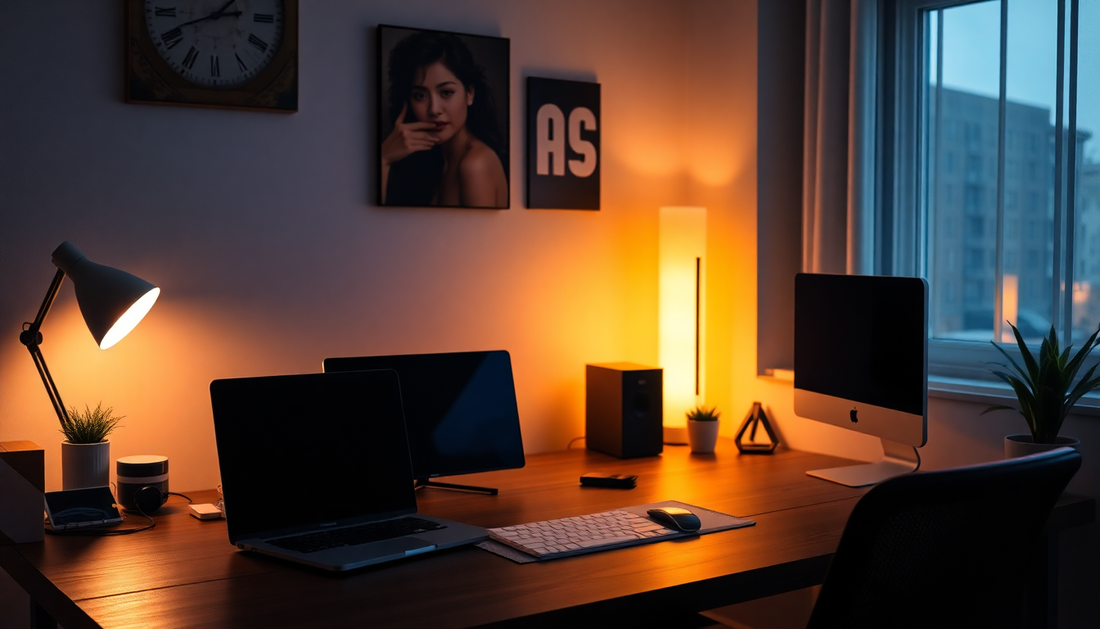
Introduction: the case for silent wellness layers
In 2025, knowledge work and remote work remain dominant for millions. Yet prolonged sitting, fragmented sleep, and constant digital focus create cumulative strain on posture, metabolic health, and cognitive fitness. Silent wellness layers are a systems approach that uses three complementary technologies nd human-centered design s unobtrusive nudges that automate micro-movements in the home office. The goal is not intrusive alarms or productivity theatre, but subtle, context-aware cues that restore mobility, posture, and circadian alignment while preserving deep focus.
Why this matters for SEO and readers
- High intent audience: people searching for ergonomic solutions, home office automation, and circadian lighting are actively seeking implementable guidance.
- Long-form, technical plus practical content ranks well for competitive keywords when it provides examples, automation scripts, and troubleshooting.
- Content that balances science, device recommendations, concrete automations, and privacy guidance answers user needs and keeps dwell time high.
What are silent wellness layers?
Silent wellness layers combine three categories of signals and interventions:
- Wearable signals: haptic nudges and motion telemetry from smartwatches, rings, or dedicated IMU sensors.
- Sensor microzones: low-friction sensors placed around the workspace that confirm presence, posture, and fine-grained micro-movements.
- Circadian lighting: tunable lighting that shifts spectrum and intensity to support alertness in the day and wind-down in the evening.
Layered together via an automation platform, these systems produce progressive, privacy-aware cues to trigger micro-breaks, posture adjustments, and transitions aligned to your biological clock.
Evidence base: why micro-movements matter
- Frequent short movements reduce time spent sedentary, which is independently associated with cardiometabolic risk.
- Brief physical activity and posture shifts improve circulation, reduce muscle stiffness, and lower risk of repetitive strain.
- Short breaks restore cognitive performance during extended focus sessions and reduce decision fatigue.
- Circadian-aligned lighting supports sleep onset and daytime alertness, improving overall productivity and wellbeing.
While a single micro-movement provides small benefit, the compounded effect of regular micro-breaks across weeks yields measurable improvements in perceived comfort and sustained performance.
Core components: deep dive
Wearables as signal sources and haptic actuators
Wearables provide reliable motion telemetry and deliver haptics without producing sound. Key capabilities to prioritize:
- Fine-grained accelerometer and gyroscope data for distinguishing wrist motion, arm swings, and micro-gestures.
- Configurable haptic patterns and intensity for non-intrusive nudges.
- Battery life sufficient for a full workday and easy charging habits.
Practical options include mainstream smartwatches, smart rings, and dedicated posture bands. Choose devices that expose local APIs or integrate with your automation hub to avoid unnecessary cloud round-trips.
Sensor microzones: context, not surveillance
Microzones are discrete sensors located in logical clusters around your desk. They confirm whether a wearable 'still' state actually corresponds to a seated worker, or to a phone left on a table. Design microzones for redundancy and privacy.
- Chair sensors or pressure mats to confirm seated state and detect weight shifts.
- Short-range proximity beacons or UWB anchors to detect exact distance and orientation between wearable and desk.
- PIR or presence sensors with short timeouts for coarse occupancy detection.
- Keyboard and mouse telemetry as additional corroboration for activity or inactivity.
Prefer sensors that process data locally and emit only high-level events to the automation hub, such as 'seated', 'standing', 'slouched', or 'away'.
Circadian lighting: gentle spectrum control
Circadian lighting goes beyond on/off scheduling. It modulates correlated color temperature and intensity throughout the day to support alertness and rest. Key patterns:
- Morning: gradually increase intensity and shift to cooler 4500K nd above for alertness.
- Midday: maintain neutral-cool light for focus and color accuracy for visual tasks.
- Afternoon: begin gentle warm shift to reduce late-day blue exposure.
- Evening: low intensity, warm tones 2700K or lower, reduce blue content to support melatonin onset.
Combine desk task lights with indirect bias lighting to reduce glare while still achieving circadian effects.
Automation hubs and orchestration
The automation layer glues wearables, sensors, and lighting together. Choose a platform that supports the privacy, local control, and integration depth you need.
- Home Assistant: robust local integrations, YAML automations, Node-RED optional flows.
- Hubitat: strong local processing and reliable scheduling for mixed ecosystems.
- Apple HomeKit: simpler rules, excellent privacy for Apple-centric homes, works well with Apple Watch triggers.
- Cloud platforms: SmartThings, commercial wellness platformsor users who prefer managed services, but check data retention and privacy terms.
Architecture patterns and data flow
Keep data flow minimal and event-based. A recommended pattern:
- Device layer emits events to local hub: wearable reports motion state, chair sensor reports pressure, presence sensor reports occupancy.
- Edge logic aggregates events and computes context: microzone fusion decides whether the user is seated, standing, or away.
- Automation rules trigger actuators: haptic pulse, micro lighting shift, or gentle sound via near-field speaker.
- Logging layer stores aggregated metrics like micro-break count and average response latency, not raw motion traces.
Sample automations: ready-to-adapt examples
Below are concrete automations you can adapt. Replace entity names with your local IDs in the automation hub.
Micro-movement reminder flow
trigger:
  platform: state
  entity_id: sensor.wearable_motion
  to: 'low_activity'
  for: '00:25:00'
condition:
  - condition: state
    entity_id: binary_sensor.chair_occupied
    state: 'on'
action:
  - service: wearable.vibrate
    data:
      pattern: short
  - service: light.turn_on
    data:
      entity_id: light.desk_task
      kelvin: 5000
      brightness_pct: 85
  - wait_for_trigger:
    - platform: state
      entity_id: sensor.wearable_motion
      to: 'active'
      for: '00:00:10'
  - service: light.turn_on
    data:
      entity_id: light.desk_task
      kelvin: 3500
      brightness_pct: 70
This pattern uses a wearable motion sensor and a chair occupancy sensor for confirmation, then escalates lighting to prompt movement and waits for a response.
Posture correction routine
trigger:
  platform: numeric_state
  entity_id: sensor.posture_angle
  below: 45
  for: '00:02:00'
action:
  - service: wearable.vibrate
    data:
      pattern: medium
  - service: light.turn_on
    data:
      entity_id: light.bias_panel
      kelvin: 2800
      brightness_pct: 35
  - delay: '00:00:20'
  - service: light.turn_off
    data:
      entity_id: light.bias_panel
Use a posture angle sensor that outputs a numeric tilt. The routine provides a short haptic and visual cue, then clears the reminder after 20 seconds.
Focus-preserving stretch reminder
trigger:
  platform: time_pattern
  minutes: '/90'
condition:
  - condition: state
    entity_id: sensor.focus_mode
    state: 'on'
action:
  - service: light.turn_on
    data:
      entity_id: light.desk_task
      kelvin: 4700
      brightness_pct: 90
  - service: wearable.vibrate
    data:
      pattern: short_long
  - delay: '00:00:30'
  - service: notify.mobile_app
    data:
      message: 'Quick stretch complete?'
This rule pings every 90 minutes during focus mode and attempts a minimal interruption: brightening the task light briefly and a vibration pattern.
Node-RED pattern for progressive escalation
Node-RED is ideal for visual escalation flows: start with haptic, then lighting, then soft chime, then escalation to visuals on a monitor if needed. Use state nodes to check wearables and chair sensors, a switch node for confirmation, and delay nodes to stage escalation.
Troubleshooting and example debug steps
- False triggers: enable logging for individual sensors to inspect event timings and adjust debounce times.
- Notification fatigue: track ignored nudges and reduce frequency or change modality for users who don't respond.
- Battery and connectivity issues: for battery-powered sensors, use longer polling and deep-sleep modes; place mesh repeaters or a UWB anchor to stabilize wireless links.
- Lighting mismatches: calibrate kelvin and brightness levels for your workspace; what feels bright in one setup may be blinding in another.
Privacy and data minimization: practical rules
- Keep processing local whenever possible and only send aggregated metrics to the cloud.
- Avoid continuous video streaming; prefer binary posture events or low-resolution silhouette inference if visual feedback is necessary.
- Implement retention policies: purge raw sensor logs after short windows and retain only daily summaries.
- Provide transparent controls to occupants: quick disable switches, physical covers, and consent prompts for shared spaces.
Accessibility and inclusivity considerations
Design nudges for varied sensory and mobility needs:
- Offer haptic-only, visual-only, and auditory-only options; allow simultaneous multi-modal cues for reliability.
- Permit extended intervals or alternate gesture definitions for users with limited mobility.
- Use clear, readable color contrasts for visual cues and avoid rapid flashing that could trigger photosensitive reactions.
Measuring success: metrics and KPIs
Define realistic, privacy-friendly KPIs to evaluate impact:
- Micro-break count per workday and weekly trend.
- Average response latency: time from first nudge to detected movement.
- Posture event reduction: minutes spent slouched per day.
- User-reported outcomes: perceived pain reduction, subjective focus, and sleep quality if circadian lighting is used.
Collect both objective sensor metrics and short weekly surveys to capture subjective benefits.
Common product categories and example devices
Devices change rapidly, but categories remain stable. Choose devices that prioritize local integration and support standard protocols like Bluetooth LE, Zigbee, Z-Wave, or local LAN APIs.
- Wearables: mainstream smartwatches, smart rings, and small IMU bands.
- Chair sensors: pressure mats and load cells integrated under cushions.
- Presence sensors: PIR, radar, or UWB anchors for precise proximity detection.
- Lighting: tunable white panels, high-CRI desk lights, and bias lighting panels.
- Hubs: Raspberry Pi running Home Assistant, local Hubitat boxes, or Apple HomePod mini for HomeKit-centric setups.
Implementation roadmap: expanded 8-week plan
- Week 1: Discovery and goals. Define what you want to change: fewer slouches, more micro-walks, or better sleep. Choose your hub.
- Week 2: Core devices. Buy one wearable and one chair or pressure sensor. Create a minimal reminder automation.
- Week 3: Lighting. Install a tunable desk lamp and schedule morning and evening scenes. Test comfort levels.
- Week 4: Microzones. Add proximity beacons or a PIR to reduce false positives. Configure fusion logic.
- Week 5: Escalation rules. Build a progressive flow with Node-RED or YAML that escalates from haptic to light to soft chime.
- Week 6: Privacy and logging. Implement local aggregation, set retention, and create an opt-out switch.
- Week 7: Personalization. Tune intervals, haptic strengths, and lighting palettes for different times of day or task types.
- Week 8: Evaluation. Review KPIs, survey users, and iterate on automation thresholds and modalities.
Typical costs and ROI considerations
- Entry-level setup: one wearable, one pressure sensor, and an intelligent lamp pproximate cost range 200 to 600 USD depending on brands.
- Mid-range: add microzone beacons, dedicated hub, and bias lighting00 to 1000 USD.
- Advanced: UWB anchors, networked sensors, and professionally-tuned lighting000+ USD.
ROI shows up as reduced discomfort, fewer breaks for pain relief, and improved sustained productivity. For remote workers, even small daily gains compound quickly.
Case study: one worker, one quiet system
Persona: Maya, 34, software engineer, works from home 5 days a week. Goals: reduce midafternoon slump, stop slouching, avoid disruptive alarms.
- Setup: smartwatch, chair pressure mat, desk lamp, Home Assistant on a local Raspberry Pi, a small bias light panel.
- Rules: 25-minute stillness triggers single short vibration and a 60-second cool-toned desk light boost. Two minutes of no-response triggers a 10-second ambient chime from a local speaker. Chair pressure confirms seated state before any nudge.
- Results after 6 weeks: average micro-breaks rose from 3 per day to 12 per day, reported lower neck pain, and felt more alert after lunch. Maya disabled escalations for late evening and fine-tuned haptics to be gentler.
Advanced integrations and future directions
As devices mature, consider:
- Machine learning models running locally to predict cognitive fatigue using multimodal sensor fusion.
- Adaptive schedules that use calendar context and meeting density to avoid nudging during deep work or synchronous calls.
- Shared office profiles that respect different preferences in multiperson home offices and automatically adapt when guests arrive.
Frequently asked questions
- Will these nudges interrupt deep work? When designed with subtle haptics and brief micro lighting shifts, silent wellness layers minimize interruption and focus on very small movements that take seconds.
- What about privacy and cameras? Prefer non-visual sensors and process motion data locally. Only use cameras if you accept the tradeoffs and implement strong local processing and retention limits.
- Do these systems require cloud subscriptions? No. Many effective setups run entirely locally using Home Assistant, Hubitat, or Node-RED, preserving privacy and avoiding recurring costs.
- How do I prevent alert fatigue? Start with low frequency, monitor ignored nudges, and customize modalities per user. Escalate only when a sequence of earlier nudges fails.
Checklist: build a minimal silent wellness layer
- Choose a local automation hub and install it on a stable machine.
- Purchase one wearable with haptic capability and one chair occupancy sensor.
- Add a tunable desk lamp and configure morning and evening scenes.
- Create a simple automation: 25 minutes stillness + seated -> short vibration + 60-second cool light boost.
- Measure, iterate, and add microzones to reduce false positives.
Conclusion: small nudges, big benefits
Silent wellness layers are an elegant, practical approach to embedding healthier habits into the flow of knowledge work. By layering wearables, sensor microzones, and circadian lighting you can automate micro-movements that protect posture, boost alertness, and improve sleep without interrupting what matters mostocused, sustainable work. Start small, prefer local processing, and iterate based on metrics and personal comfort. The technology has matured enough that a meaningful system is accessible and affordable for most home offices.
Next steps and resources
- Try a single automation today: set a 25-minute stillness detection with one vibration and a 60-second lighting boost.
- Explore Home Assistant or Hubitat communities for ready-made device integrations and YAML examples.
- Keep a brief weekly log of micro-breaks and perceived comfort to guide tuning.
Ready to scale your silent wellness layer? Share your setup and goals, and you can get a tailored automation plan with suggested device mappings and threshold defaults that match your workspace and daily rhythm.