
How to Design a Home Office and Fitness Space That Adapts to Your Mental and Physical Wellness Needs
Introduction
In 2025, the boundaries between work, wellness, and home life have become increasingly fluid. As remote work continues to be a dominant mode of employment, designing a home office that doubles as a fitness space is not just a luxury but a necessity for many. This hybrid space can serve as a sanctuary that supports your mental clarity, physical health, and productivity all in one. The key is to create an environment that is adaptable, efficient, and nurturing to both mind and body. This comprehensive guide will walk you through every step of designing a home office and fitness space tailored to your mental and physical wellness needs, ensuring you thrive in your daily routine.
Why Combine a Home Office and Fitness Space?
Before diving into the design process, it’s important to understand the benefits of merging your workspace with your fitness area. This approach reflects a holistic view of well-being, which recognizes that mental and physical health are deeply interconnected.
- Boost in Productivity and Creativity: Physical activity stimulates the brain, enhancing cognitive functions like memory, problem-solving, and creativity. Taking breaks for movement can help you return to work with renewed focus.
- Stress Management and Mental Wellness: Exercise releases endorphins, reducing stress and anxiety. Having space to practice mindfulness, yoga, or quick workouts can significantly improve your emotional health.
- Improved Physical Health: Sitting for prolonged periods is linked to numerous health issues. A fitness area encourages regular movement to counteract these effects.
- Time Efficiency and Convenience: Eliminating the commute to a gym makes it easier to incorporate fitness into your day, increasing adherence to wellness routines.
- Space Maximization: Thoughtful integration helps make the most of limited space, especially in urban or smaller homes.
Step 1: Evaluate Your Space and Define Your Wellness Goals
Every successful design begins with a clear understanding of the space you have and the goals you want to achieve.
Assess Your Available Space
Measure the dimensions of your designated area. Consider natural light sources, electrical outlets, ventilation, and privacy. If space is limited, think vertically and consider multi-purpose furniture to expand usability.
Identify Your Mental and Physical Wellness Needs
Reflect on your work habits and fitness preferences:
- Do you need a quiet environment for focused tasks or a creative, dynamic feel?
- What kind of physical activities do you enjoy or want to incorporate? (e.g., yoga, strength training, cardio, stretching)
- Are mindfulness practices like meditation or breathing exercises part of your routine?
- Do you require storage for equipment, files, or personal items?
Defining these needs ensures the space supports your lifestyle rather than restricting it.
Step 2: Design a Flexible, Multi-Functional Layout
The layout should support seamless transitions between work and fitness while maintaining clear boundaries to help your brain switch modes effectively.
Create Distinct Zones
Use physical or visual cues to differentiate zones:
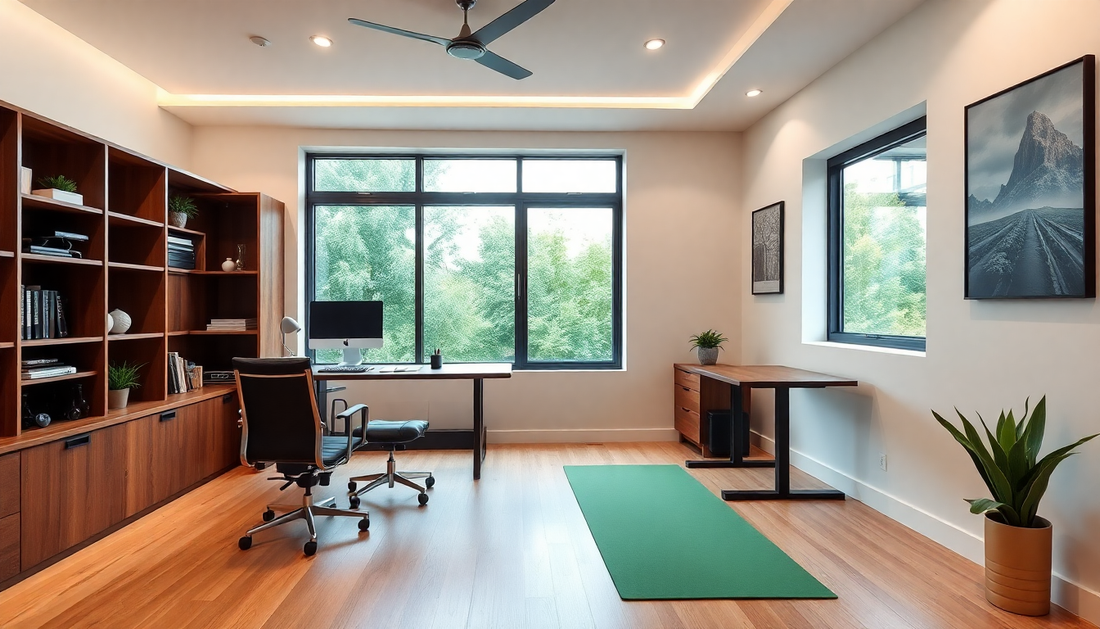
- Furniture Arrangement: Position your desk facing a window for natural light and a calming view, while allocating a corner or side wall for fitness equipment.
- Room Dividers: Use open shelving, curtains, or portable screens to separate the areas without making the space feel closed off.
- Flooring Differences: Consider using rugs or mats to delineate areas visually and functionally.
Choose Multi-Functional and Space-Saving Furniture
- Adjustable Desks: Sit-stand desks allow you to change posture throughout the day.
- Foldable or Wall-Mounted Equipment: Resistance bands, foldable treadmills, or wall-mounted racks save space.
- Storage Solutions: Incorporate cabinets or drawers that can hold both office supplies and fitness gear to reduce clutter.
Leave Room for Movement
Ensure there is enough clear space for stretching, yoga, or bodyweight exercises without obstacles. Flexibility is key to adapting the space for different activities.
Step 3: Prioritize Ergonomics for Body and Mind
Ergonomics is critical in supporting long-term health and preventing injury, especially when your space serves dual purposes.
Ergonomic Home Office Setup
- Chair: Invest in an ergonomic chair with lumbar support to maintain good posture.
- Desk: Adjustable height desks can help reduce strain and encourage movement.
- Monitor Placement: Position your screen at eye level to avoid neck strain.
- Keyboard and Mouse: Use ergonomic designs to reduce wrist stress.
Fitness Area Ergonomics
- Flooring: Use shock-absorbent mats to protect your joints during workouts.
- Proper Equipment Setup: Ensure all fitness equipment is set up to prevent injury and easy to access.
- Posture and Movement Space: Maintain enough room to move freely and practice exercises with correct form.
Step 4: Optimize Lighting and Ambiance
Lighting and ambiance play vital roles in influencing mood, energy, and productivity levels.
Maximize Natural Light
Position your desk near windows to benefit from natural daylight, which can elevate mood and regulate circadian rhythms.
Layered Artificial Lighting
- Task Lighting: Use adjustable desk lamps with warm light to reduce eye strain.
- Ambient Lighting: Soft overhead lights create a comfortable atmosphere.
- Accent Lighting: Consider LED strips or smart bulbs to adjust colors and brightness depending on the time of day or activity.
Color Psychology
Choose colors that support your mental and physical wellness:
- Calming Colors: Blues, greens, and earth tones promote relaxation and reduce anxiety.
- Energizing Colors: Yellows, oranges, and reds can boost motivation and creativity but should be used sparingly.
- Neutral Base: A neutral backdrop allows flexibility in adding colorful accents.
Step 5: Incorporate Wellness-Enhancing Elements
Beyond function, your space should nourish your senses and support a balanced lifestyle.
Bring in Nature
- Plants: Indoor plants improve air quality, reduce stress, and add visual interest.
- Natural Materials: Use wood, stone, or bamboo furniture and accessories to create warmth and connection with nature.
Sound and Acoustics
- Noise Management: Use rugs, curtains, or acoustic panels to reduce echo and external noise.
- Ambient Sounds: Incorporate white noise machines, nature sounds, or calming music to enhance focus and relaxation.
Air Quality and Ventilation
Good air circulation boosts cognitive function and physical health. Consider air purifiers or fans to maintain fresh air flow.
Personalized Decor
Add artwork, inspirational quotes, or meaningful objects that uplift your mood and motivate you throughout the day.
Step 6: Smart Technology Integration
Leveraging technology can further optimize your space for wellness and productivity.
- Smart Lighting Systems: Automate lighting to adjust based on time of day or activity.
- Fitness Trackers and Apps: Use devices and apps to monitor your workouts and encourage movement breaks.
- Ergonomic Reminders: Apps or devices can remind you to adjust posture, hydrate, or take breaks.
- Virtual Assistants: Help manage schedules, control music, or set meditation timers without disrupting flow.
Step 7: Develop a Balanced Daily Routine
Even the best-designed space needs a routine that encourages balance and well-being.
Incorporate Movement Breaks
Set alarms or use apps to remind yourself to stand, stretch, or perform brief exercises every hour.
Mindfulness and Meditation
Dedicate time in your fitness zone for breathing exercises, meditation, or yoga to support mental clarity and reduce stress.
Set Boundaries Between Work and Wellness
- Work Hours: Define clear work start and end times.
- Fitness Time: Schedule workouts as non-negotiable appointments.
- Digital Detox: Limit screen time outside work hours to prevent burnout.
Step 8: Maintain and Evolve Your Space
Your needs and preferences may change over time, so your space should evolve accordingly.
- Regular Decluttering: Keep your environment tidy to reduce stress and increase efficiency.
- Reassess Equipment and Furniture: Upgrade or replace items that no longer serve you well.
- Seasonal Adjustments: Modify lighting, decor, or layout to suit different seasons or moods.
- Incorporate Feedback: Reflect on what works and what doesn’t, and adjust the space accordingly.
Conclusion
Designing a home office and fitness space that adapts to your mental and physical wellness needs is a transformative approach to modern living and working. It requires thoughtful planning, attention to detail, and an understanding of your unique lifestyle. By assessing your space and goals, creating flexible layouts, prioritizing ergonomics, optimizing lighting and ambiance, integrating wellness elements, leveraging technology, establishing balanced routines, and maintaining adaptability, you can craft a sanctuary that supports your health, productivity, and happiness. Embrace this holistic design to thrive in 2025 and beyond, turning your home into a vibrant hub of wellness and success.