
Habit-Scaffolded Home Offices: Using Wearable Timers, Sensor Microzones & Circadian Lighting to Automate Daily Movement Rituals
Introduction
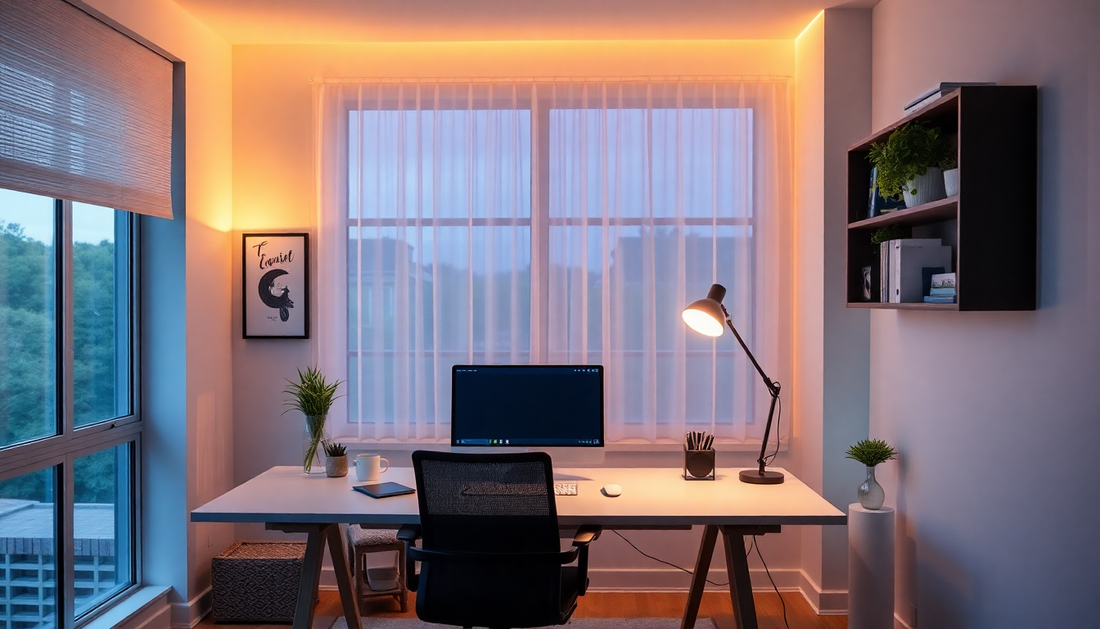
Hybrid and remote work have become enduring parts of modern life in 2025. As millions continue to work from home or in hybrid schedules, the next frontier is not simply replicating the office but designing home workspaces that proactively support health, cognition, and sustainable routines. Habit-scaffolded home offices use wearable timers, sensor microzones, and circadian lighting to create low-friction movement rituals that reduce sedentary harm, optimize focus, and help workers transition cleanly between work and life.
Executive Summary
- Goal: Turn intentions into automatic movement rituals through coordinated cues and environmental automation.
- Core components: Wearable timers for personal nudges, sensor microzones for contextual awareness, and circadian lighting for biological alignment.
- Outcome: Reduced sitting time, improved energy rhythms, consistent micro-break adherence, better focus, and healthier end-of-day transitions.
Why This Matters: The Science in Short
The science behind habit-scaffolded spaces pulls from three areas: behavioral economics, circadian biology, and ergonomics. Behavioral economics shows that simple cues and reduced friction dramatically increase adherence. Circadian biology teaches that light and timing regulate alertness and sleep. Ergonomics and occupational health demonstrate that frequent micro-movements and posture resets prevent musculoskeletal pain and improve metabolic markers.
- Behavioral cues: Haptic or light cues act as triggers that link an action to a context, forming reliable habit loops.
- Circadian timing: Exposure to certain light spectra at the right times reinforces wake windows and wind-down phases.
- Movement dosing: Short, frequent activity bursts counteract the harms of prolonged sitting more effectively than a single long workout.
Key Concepts and Definitions
- Habit scaffold: A designed environmental system of cues and automations that supports a behavior until it becomes habitual.
- Wearable timer: A small device or app that provides tactile, visual, or auditory prompts to signal a ritual or break.
- Sensor microzone: A localized cluster of sensors that detect presence, posture, or specific actions within a small area of the home office.
- Circadian lighting: Lighting that changes intensity and spectrum through the day to align with biological rhythms.
Detailed Component Guide
Wearable Timers: Design, Selection, and Use
Wearable timers are the personal trigger layer. They are effective because they travel with the body and provide private, immediate cues. Consider the following when selecting and configuring wearable timers.
Form Factors and Features
- Wrist bands and smartwatches: Offer robust features, haptics, and integration with phone calendars.
- Clip-on timers and discreet rings: Lower profile options for people who dislike wrist devices.
- Simplified tactile timers: Single-purpose devices with strong haptics and long battery life ideal for minimalists.
- Key features: programmable intervals, multiple cue patterns, do not disturb integration, and optional guided content like breathing or stretch sequences.
Cue Strategies
- Micro-break cues: Short vibration every 30 to 60 minutes prompting a 60 to 90 second movement or stretch.
- Deep work anchors: Longer silent focus blocks of 60 to 120 minutes with a distinct cue at block end.
- Transition nudges: Morning ramp-up and evening wind-down sequences to mark the start and end of the workday.
Sensor Microzones: Where Context Meets Action
Microzones create context sensitivity so automation is only triggered when it is relevant and helpful. They reduce false positives and make cues feel intelligent rather than annoying.
Designing Effective Microzones
- Identify key locations: desk surface, chair zone, doorway or path to a balcony, coffee or hydration station, and a standing desk area.
- Sensor types: pressure sensors for chairs, load sensors for desks, infrared motion sensors for zones, proximity beacons, and small wearable beacons for handoffs between zones.
- Granularity: Keep zones small. A microzone should represent a single, repeatable action location so automations can be precise.
Smart Uses of Microzones
- Chair pressure drop triggers: When pressure falls below a threshold mid-session, cue a seated stretch before the user fully leaves the desk.
- Doorway motion triggers: Detect a short departure and suggest a brisk 5-minute walk rather than a long break if time limited.
- Hydration station: Light the hydration microzone and vibrate the wearable if no water intake is detected in the past two hours.
Circadian Lighting: Biology-Friendly Illumination
Circadian lighting is not only about brightness, but spectrum. Cooler, bluer light increases alertness in the morning while warmer, amber tones promote relaxation toward evening.
Implementing Circadian Lighting
- Morning protocol: Increase intensity and shift spectrum toward cool white during the first 90 minutes after waking or at the start of the workday.
- Midday maintenance: Maintain neutral lighting and allow brief high-intensity boosts during planned breaks to reinforce wakefulness.
- Afternoon taper: Gradually reduce intensity and shift spectrum warmer starting mid-afternoon, increasing the wind-down cues in the final work hour.
- Evening shield: After the workday, reduce blue light exposure by switching to warm tones and consider evening machine defaults that favor amber lighting for reading or dinner.
Integration Patterns: Orchestrating Components
Integration is where the system moves from useful to transformative. The three layers should feed signals to one another and respond adaptively.
Example Automation Flows
- Flow 1: Micro-break confirmation
- Trigger: Wearable timer vibrates after 50 minutes of sitting.
- Microzone confirms seat pressure above threshold.
- Lighting nudges: subtle warm shift to mark micro-break.
- Action: Wearable launches a 90 second guided stretch and logs completion.
- Flow 2: Midday outdoor reset
- Trigger: Calendar shows lunch window and motion sensor detects leaving desk.
- Lighting: doorway and path microzone lights guide user to exit point.
- Wearable: suggests a 15 minute outside walk if weather and time permit.
- Flow 3: Meeting suppression
- Trigger: Calendar detects an ongoing meeting and microphone or presence sensor confirms audio activity.
- Action: Disable break nudges, dim background lighting to reduce distractions, and mark focused meeting mode.
Platform Choices and Interoperability
To make these integrations reliable, select platforms and protocols that prioritize local control and interoperability.
- Open protocols: Matter and Zigbee enable cross-vendor compatibility and help avoid vendor lock-in.
- Local automation hubs: Home Assistant, open source hubs, or dedicated edge devices reduce latency and improve privacy.
- Cloud-first systems: Often easier to set up but require evaluating privacy and data retention policies carefully.
Sample Configurations and Pseudocode
Below are conceptual automation snippets to illustrate logic. These are intentionally platform-agnostic and meant to be adapted to the automation tool you use.
Sample automation: micro-break confirmation
When wearable_timer triggers and chair_pressure > threshold and calendar_status == free:
  send_haptic_to_wearable(pattern short)
  set_lighting(scene microbreak_warm)
  start_guided_sequence(stretch_90s)
  if guided_sequence completed:
    increment_break_counter
    store_event locally
Sample automation: evening wind-down
At work_end_time or when user marks day_end:
  set_lighting(scene warm_low)
  send_haptic_sequence(to_wearable winddown)
  enable do_not_disturb on work_devices
  log exit_time
  if exit_time consistent for 5 days:
    reinforce routine and reduce prompt intensity
Privacy and Security Best Practices
- Minimize collection: Only collect the data necessary to run automations. Prefer event logs over continuous audio or camera streams.
- Local processing: Keep real-time decision making on the edge to reduce exposure of personal data to cloud services.
- Encryption and authentication: Ensure devices use modern encryption, and change default passwords on local hubs.
- Transparent consent: If other household members use shared spaces, set clear boundaries for sensing and data retention.
Measuring Outcomes and Key Metrics
To evaluate effectiveness, track both objective behavior metrics and subjective wellbeing measures.
Objective tracking
- Micro-break frequency: Number of breaks per workday and average interval length.
- Standing time and steps: Total time standing and steps during work hours.
- Posture correction count: Number of posture nudges and corrections confirmed.
- Light exposure timing: Timestamped light spectrum changes aligned with wake and wind-down phases.
Subjective tracking
- Energy logs: Quick morning, midday, and evening ratings to detect rhythm improvements.
- Soreness and pain reports: Weekly check-ins to detect ergonomic problems early.
- Focus and productivity ratings: Short daily micro-surveys to evaluate deep work quality.
Dashboards and Analytics
Create a simple weekly dashboard that shows trends rather than raw data. Useful visual items include micro-break adherence rate, average deep work duration, and a sleep onset latency trend if available. Use rolling 7 and 30 day averages to smooth noise.
Case Studies and Personas
Understanding how these systems work in real households helps illustrate practical decisions and tradeoffs.
Persona A: The Knowledge Worker with Long Meetings
- Challenges: Long back-to-back meetings and difficulty remembering to move.
- Solution: Configure wearable to only nudge between meetings or during calendar gaps, and deploy chair pressure sensors to encourage posture checks during short meeting breaks.
- Outcome: Improved posture reports and micro-break adherence without interrupting meetings.
Persona B: The Focused Creator
- Challenges: Needs long uninterrupted deep work blocks but suffers mid-afternoon slumps.
- Solution: Use 90 minute deep work anchors, circadian lighting boost at 15 minutes before planned slump, and a short movement cue tied to doorway motion sensor.
- Outcome: Higher quality deep work sessions and fewer afternoon crashes.
Persona C: The Parent with Fragmented Time
- Challenges: Interrupted workflows and unpredictable breaks due to childcare.
- Solution: Sensors detect short departures so the system suggests 3 minute breathing resets or micro-mobility sets that fit into brief interruptions. Use evening wind-down routines to clearly mark end of workday.
- Outcome: More consistent mini-rituals and clearer separation between work and family time.
Common Problems and Extended Troubleshooting
- Overprompting: Reduce cue frequency, add calendar integration, and add a learning buffer so prompts diminish after initial compliance.
- False positives from sensors: Recalibrate thresholds for pressure sensors and place motion sensors at a better angle to avoid passthrough triggers.
- Resistance to wearables: Offer alternatives such as phone haptics, desk-based vibrational cueers, or ambient lighting nudges.
- Lighting fatigue: Use gradual changes over days, and offer manual overrides with simple presets.
Scaling and Team Use
Companies supporting remote employees can adopt scaled habit scaffolds for home offices while respecting privacy. Offer recommended device bundles, provide guidance on local-only processing, and allow employees to opt into anonymized aggregate studies that measure health and productivity benefits.
SEO Considerations for This Topic
To help this article rank well, here are practical SEO elements incorporated and recommended:
- Long form content: Extensive practical detail increases dwell time and signals expertise.
- Target long-tail keywords: habit scaffolded home office, wearable movement prompts, sensor microzones, circadian office lighting, automate movement rituals.
- Use descriptive headings: Plenty of h2 sections help search engines and readers scan content.
- Structured content and FAQ: Provide clear questions and direct answers to common user queries.
- Internal linking and updates: Link to related resources and keep content fresh with new case studies and product updates.
FAQ
- How often should a wearable prompt movement?
- Start with every 30 to 60 minutes for micro-breaks and test tolerance. For deep work, use 60 to 120 minute focus blocks with fewer interruptions.
- Are circadian lighting systems safe and effective?
- Yes, when properly configured. Follow manufacturer recommendations and avoid excessive blue light in the evening to protect sleep. Use warm tones after work hours.
- Can these systems respect privacy?
- Yes. Favor local processing, avoid cameras when possible, and anonymize or minimize data stored in the cloud.
- What are low-cost ways to start?
- Begin with a smartphone or simple wearable timer and a single motion sensor or pressure mat. Upgrade lighting gradually with smart bulbs that support color temperature changes.
Implementation Checklist: 8 Week Roadmap
- Week 1: Audit your current routine and identify 3 rituals to automate.
- Week 2: Select a wearable timer and one microzone sensor. Configure basic alerts and logging.
- Week 3: Install circadian-capable lighting or smart bulbs and set default day and evening scenes.
- Week 4: Integrate sensors, wearable, and lighting into an automation hub with basic flows for breaks and deep work.
- Week 5: Run a 2 week experiment measuring objective and subjective metrics.
- Week 6: Review results, adjust timing, and refine cues.
- Week 7: Add one more microzone and a targeted ritual such as hydration or posture resets.
- Week 8: Create a weekly dashboard and set goals for the next quarter.
Future Trends to Watch
- On-device AI that predicts optimal break timing from physiologic signals while keeping raw data local.
- Greater interoperability thanks to universal standards and wider Matter adoption across wearable and lighting vendors.
- Adaptive ritual suggestion engines that propose new micro-habits based on performance and health outcomes.
Conclusion
Habit-scaffolded home offices blend behavioral science, sensing, and biologically aligned lighting to make healthy movement rituals automatic. Implementing wearable timers, sensor microzones, and circadian lighting in a coordinated system reduces sedentary harm, improves focus, and creates clear transitions across the workday. Start small, measure both objective and subjective outcomes, prioritize privacy, and iterate. Over weeks and months these small, scaffolded cues compound into meaningful improvements in health and productivity.
Next Steps
- Perform a weeklong audit of your current workday and identify friction points for movement.
- Choose one ritual to automate this month and implement the minimal hardware required to support it.
- Track results and refine. Share what works with peers to accelerate adoption and collective improvement.
By aligning cues, context, and biology, you can transform your home office into an intelligent scaffold that supports healthier, more productive days.