
Elevate Your Home Workspace and Fitness Routine: Integrative Design Approaches to Foster Wellness and Efficiency
Introduction
As we move deeper into 2025, the way we approach work and wellness continues to evolve, especially within the boundaries of our homes. The COVID-19 pandemic accelerated a shift toward remote and hybrid work models, and many have now embraced the idea of a home that serves not just as a living space but as a multifunctional environment supporting productivity and health. Elevating your home workspace alongside your fitness routine through integrative design is not just a trend—it’s a necessity for fostering long-term wellness and efficiency.
In this comprehensive guide, we’ll explore how to blend your home office with your fitness area thoughtfully and effectively. This approach can improve your overall quality of life by enhancing work focus, boosting physical health, and creating a harmonious living space tailored to your needs.
The Rising Need for Integrative Home Design
Remote work has become a standard rather than an exception. According to recent studies, nearly 60% of professionals engage in some form of remote work, making the home office a central element in daily life. Simultaneously, health consciousness is at an all-time high, with many people seeking convenient ways to incorporate physical activity into their routines.
Integrative design merges these two priorities by creating spaces that fluidly support both work and fitness, reducing the mental and physical barriers between professional responsibilities and health goals. This concept aligns with holistic wellness models that emphasize the interconnectedness of physical environment, mental health, and productivity.
Why Combine Your Workspace and Fitness Area?
Designing your home to accommodate both work and fitness offers numerous benefits:
- Boosted Cognitive Function: Regular physical activity stimulates brain function, leading to improved memory, concentration, and problem-solving skills—key components of productivity.
- Reduced Stress and Anxiety: Exercise releases endorphins and reduces cortisol levels, helping to manage workplace stress effectively.
- Time Management Efficiency: Having fitness resources at hand enables you to fit workouts into your day without sacrificing work time or needing to travel to a gym.
- Better Work-Life Balance: Delineating areas for work and health within your home helps maintain boundaries, preventing burnout and promoting relaxation.
- Space Maximization: Integrating functions encourages creative use of limited space, ideal for apartments or smaller homes.
Core Principles of Integrative Design for Home Workspace and Fitness
Before diving into specific strategies, it’s important to understand the foundational principles guiding integrative design:
- Flexibility: Spaces and furniture should adapt to multiple uses, allowing seamless transitions between work and exercise.
- Ergonomics: Prioritize comfort and proper body alignment to prevent injury during work and workouts.
- Minimalism and Organization: Keep clutter to a minimum to reduce distractions and create a calming environment.
- Natural Elements: Incorporate daylight, fresh air, and plants to enhance mood and energy.
- Personalization: Tailor your space to your preferences, ensuring it motivates and supports your unique workflow and fitness needs.
Step-by-Step Design Strategies to Elevate Your Home Workspace and Fitness Routine
1. Assess Your Space and Needs
Begin by evaluating the available space and understanding your daily work and fitness requirements. Consider questions like:
- How much room do you have for both activities?
- What types of workouts do you prefer—yoga, strength training, cardio?
- What equipment do you own or plan to acquire?
- What are your peak productivity times, and when do you prefer to exercise?
This assessment helps you prioritize design elements and avoid overcrowding your space.
2. Choose Multi-Functional and Ergonomic Furniture
Select furniture that supports both productivity and movement:
- Adjustable Standing Desks: These desks allow you to alternate between sitting and standing, reducing sedentary time and encouraging movement.
- Ergonomic Chairs: Invest in chairs with lumbar support that can be easily moved or stored when transitioning to your fitness area.
- Foldable or Convertible Pieces: Desks or benches that fold or double as workout equipment save space and add versatility.
3. Define Zones with Thoughtful Layout and Aesthetic Cues
Even in open spaces, defining separate zones helps mentally switch between work and fitness modes. Use these design tools:
- Area Rugs: Different rugs can visually separate the workspace from the fitness zone.
- Lighting: Task lighting for work and softer, adjustable lighting for workouts can set distinct moods.
- Partitions or Screens: Portable room dividers help create privacy and reduce distractions.
- Color Schemes: Use calming colors like blues and greens in your workspace and energizing tones like oranges or reds in your fitness area.
4. Prioritize Natural Light and Ventilation
Natural light is proven to enhance mood and productivity, while proper ventilation refreshes your environment during workouts. To maximize these benefits:
- Position your desk near windows to benefit from daylight.
- Use sheer curtains to control glare without sacrificing brightness.
- Incorporate air purifiers or open windows to maintain air quality.
- Add indoor plants known for improving air quality, such as snake plants or pothos.
5. Select Compact and Versatile Fitness Equipment
For a streamlined setup, choose equipment that fits your fitness style without overwhelming your space:
- Resistance Bands: Lightweight and portable, perfect for strength training and stretching.
- Adjustable Dumbbells: Save space with weights that combine multiple sizes.
- Yoga Mats and Blocks: Essential for floor exercises and easy to roll up and store.
- Foldable Treadmills or Stationary Bikes: Ideal if you want cardio options but need to save room.
6. Integrate Technology to Enhance Efficiency
Technology is a powerful ally for managing both work and fitness in one space:
- Smart Lighting: Automated lighting systems that adjust to time of day improve focus and energy levels.
- Fitness Apps and Virtual Trainers: These provide guided workouts and track progress without requiring physical trainers.
- Noise-Cancelling Headphones or Speakers: Block distractions during work or motivate workouts with music or podcasts.
- Multi-Device Charging Stations: Keep your gadgets organized and powered throughout the day.
7. Emphasize Organization and Minimalism
A cluttered space can hinder both productivity and relaxation. Consider these organizational tips:
- Dedicated Storage: Use baskets, shelves, or cabinets specifically for fitness gear and office supplies.
- Cable Management: Use clips and organizers to keep wires tidy and out of sight.
- Daily Reset Routine: Spend a few minutes at the end of each day to tidy your space, preparing for the next day’s activities.
8. Incorporate Wellness Elements Beyond Fitness
Integrative design isn’t just about physical activity and work; it also supports overall well-being:
- Meditation Corner: A quiet nook with cushions or a small bench can encourage mindfulness practices.
- Hydration Station: Keep a water bottle or infuser nearby to promote hydration throughout the day.
- Healthy Snack Area: A small fridge or basket with nutritious options prevents unhealthy snacking.
- Temperature Control: Use fans, heaters, or smart thermostats to maintain comfort.
Case Studies: Real-Life Examples of Integrative Home Spaces
To inspire your design, here are some examples of how people have successfully combined their workspace and fitness routines:
- Urban Apartment Studio: A young professional uses a foldable standing desk and stores resistance bands and yoga mats under the bed. She employs a portable room divider and layered lighting to create separate zones in a single room.
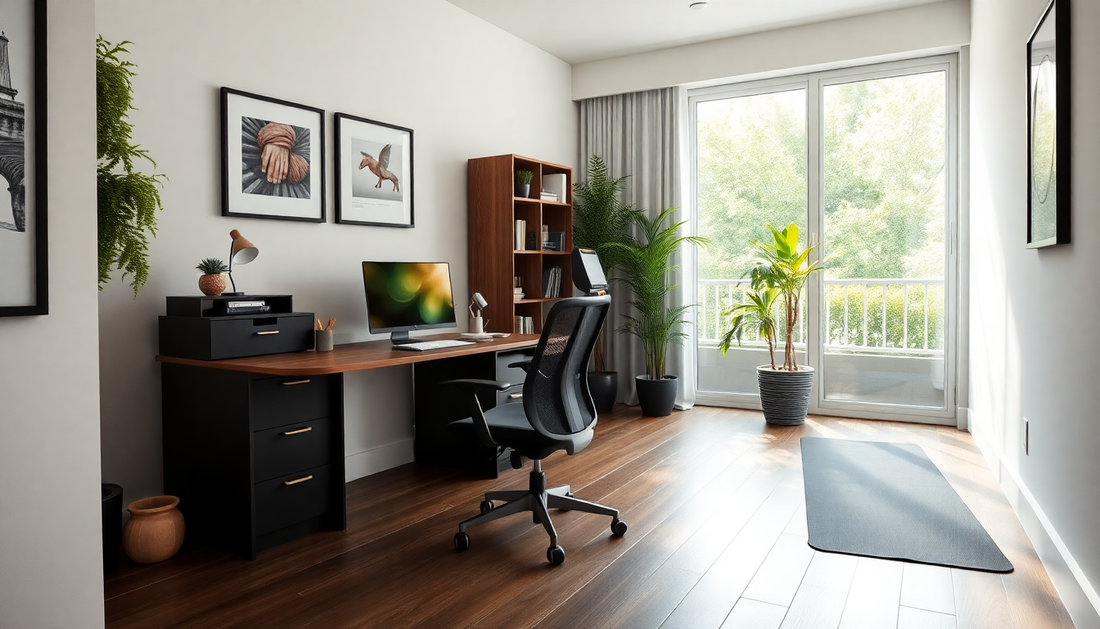
- Suburban Home Office: A family converted a spare bedroom into a multifunctional space with a treadmill desk, ergonomic chair, and wall-mounted shelves for dumbbells and fitness accessories. Plants and natural light enhance the space’s ambiance.
- Minimalist Loft: A freelancer utilizes adjustable furniture and wall-mounted storage to keep the open loft organized. The fitness area includes a compact rowing machine and a meditation corner with floor cushions and soft lighting.
Maintaining Motivation and Consistency
Design can set the stage, but maintaining a routine requires motivation and discipline. Here are tips to stay consistent:
- Set Clear Goals: Define what you want to achieve both professionally and physically.
- Schedule Breaks and Workouts: Use calendar reminders to integrate movement into your workday.
- Track Progress: Use journals or apps to monitor productivity and fitness milestones.
- Create Rituals: Start your day with a short stretch or meditation to signal a shift into work mode.
- Stay Flexible: Adapt your routine and space as your needs evolve.
Conclusion
Elevating your home workspace and fitness routine through integrative design is a powerful way to support your overall wellness and efficiency. By carefully planning your environment to accommodate both work and physical activity, you create a sanctuary that nurtures body and mind. The strategies outlined in this article offer a roadmap to transform your home into a dynamic, inspiring space that helps you thrive in all areas of life.
Embrace these design principles today and watch your productivity soar alongside your health and happiness.